
Welding machines have become an indispensable tool in various industries, from construction and manufacturing to automotive and aerospace. As a leading welding machine manufacturer, we understand the importance of knowing the working principles behind these powerful devices. In this blog post, we will delve into the fascinating world of welding machines, including wire mesh welding and other welding machines, exploring the science and technology that enables them to create strong, durable bonds between metal components. Whether you’re a professional welder, a DIY enthusiast, or simply curious about the inner workings of these machines, this article will provide you with valuable insights into the principles that power modern welding equipment.
Basic Principle of Welding Machines
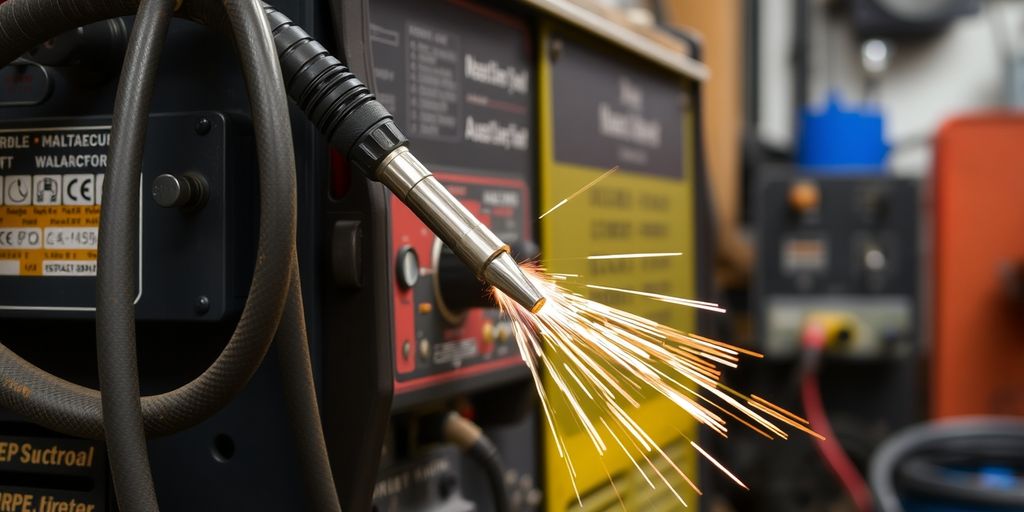
The fundamental principle behind welding machines lies in their ability to generate an electric arc, which produces immense heat capable of melting metals. This process is known as arc welding and is the basis for various welding techniques, such as stick welding, MIG welding, and TIG welding.
Welding machines create an electric arc by supplying a high-intensity electrical current between an electrode (typically a consumable wire or rod) and the base metals being joined. The arc acts as a concentrated heat source, reaching temperatures up to 6,500°C (11,700°F) Source. This intense heat melts the base metals and any additional filler material, allowing them to fuse together upon cooling and solidification, forming a strong welded joint.
The electric arc is sustained by a continuous flow of electrical current from the welding machine’s power source, through the welding cable and torch, and across the gap between the electrode and the workpiece. As the molten metal from the electrode and base metals intermix, the welding torch or gun is moved along the joint, progressively joining the two pieces of metal together.
Main Components of a Welding Machine
A typical welding machine comprises several key components that work together to facilitate the welding process. These include:
Power Source: The power source is the heart of the welding machine, generating the electricity required to create the welding arc. It converts input power (from a wall outlet, generator, or battery) into the specific voltage and current needed for the chosen welding process. Power sources can be AC (alternating current) or DC (direct current), with DC being more common for welding applications.
Welding Torch/Gun: The welding torch or gun is the handheld component that delivers the welding electrode and shielding gas to the workpiece. It serves as the conduit for the welding arc and filler material, allowing the operator to direct the heat and molten filler where needed. Torches vary in design based on the specific welding process being used (e.g., MIG, TIG, stick).
Welding Cables: Heavy-duty welding cables connect the power source to the welding torch and the workpiece, completing the electrical circuit. These cables must be able to handle the high currents involved in welding without overheating or excessive voltage drop.
Shielding Gas Supply: In certain welding processes like MIG and TIG, an inert or semi-inert shielding gas is used to protect the molten weld puddle from atmospheric contamination. The shielding gas supply provides a steady flow of gas through the welding torch to create this protective shroud around the weld area. Common shielding gases include argon, helium, and carbon dioxide.
Stick Welding Process
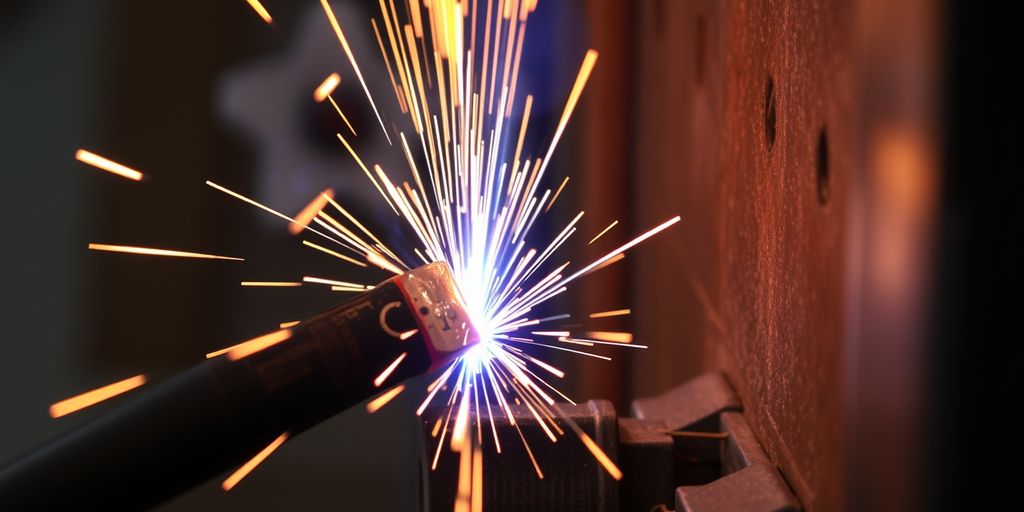
Stick welding, also known as Shielded Metal Arc Welding (SMAW), is one of the most commonly used welding processes. It involves an electric current passing through a consumable electrode covered in flux. When the electrode makes contact with the workpiece, it creates an electric arc that melts both the electrode and the base metals, forming a molten weld pool.
The key principles behind stick welding include:
- The flux coating on the electrode vaporizes and creates shielding gases to protect the weld from contamination.
- The electrode itself acts as the filler material, with the molten metal from the electrode filling the joint as it is consumed.
- The intense heat generated by the electric arc (up to 6500°F or 3600°C) melts the base metals and allows them to fuse together.
The main equipment used in stick welding includes:
- A power source to generate the electric current
- An electrode holder to grip the consumable electrode
- Ground clamps to complete the electrical circuit
- Chipping hammers and wire brushes for cleaning the weld
Advantages of stick welding include its versatility, as it can be used on a wide range of materials and in various positions. It is also relatively inexpensive and portable. However, it has some disadvantages, such as a slower deposition rate, increased risk of weld defects, and the need for frequent electrode changes.
MIG Welding Process
MIG (Metal Inert Gas) welding, also known as Gas Metal Arc Welding (GMAW), is a popular arc welding process that uses a continuous solid wire electrode fed through a welding gun. The wire electrode acts as both the filler material and the conductor of electrical current to create the arc between the workpiece and the electrode tip.
In the MIG welding process, an electric arc forms between the wire electrode and the workpiece, melting the wire and the base metals to form the weld pool. As the wire continuously feeds, it acts as the filler material, joining the two pieces of metal together. A shielding gas, typically an inert gas like argon or a mixture of gases, flows out of the welding gun to protect the molten weld pool from atmospheric contamination and oxidation.
The key components of a MIG welding setup include the power source, wire feeder, welding gun, shielding gas supply, and welding cables. The power source supplies the electrical current, while the wire feeder precisely controls the feed rate of the wire electrode. The welding gun holds the wire electrode and directs the shielding gas to the weld area.
Advantages of MIG welding include relatively high welding speed, versatility in welding different metals and thicknesses, ease of use for beginners, and the ability to weld in various positions. However, it may not be suitable for welding certain metals like aluminum or stainless steel without specialized equipment and techniques. Additionally, the shielding gas and consumable wire can add to the overall cost. Source
TIG Welding Process
TIG (Tungsten Inert Gas) welding, also known as GTAW (Gas Tungsten Arc Welding), is a precise and versatile welding process used to create high-quality welds. The principles behind TIG welding involve the use of a non-consumable tungsten electrode to create an arc between the electrode and the workpiece. The heat generated by the arc melts the base metals, and a filler metal is added manually to the molten pool to form the weld.
The TIG welding equipment consists of a power source, a TIG torch with a tungsten electrode, shielding gas (typically argon or helium), and filler rods. The welder controls the arc by adjusting the amperage and voltage, while the shielding gas protects the molten weld pool from atmospheric contamination. The process allows for excellent control over the weld, making it suitable for welding thin materials and intricate joints. Source
Advantages of TIG welding include the ability to produce high-quality welds with a clean and precise appearance, the capability to weld a wide range of metals (including aluminum and stainless steel), and the ability to control the heat input precisely. However, TIG welding is generally slower and more labor-intensive than other welding processes, and it requires a high level of skill and expertise from the welder.
Other Welding Processes
In addition to the common stick, MIG, and TIG welding processes, there are other specialized techniques used in certain applications. Two notable examples are spot welding and laser welding.
Spot welding is a resistance welding process primarily used in the automotive industry for joining sheet metal components. It involves clamping the metal pieces together and passing an electrical current through them, generating localized heat and fusing the materials at the desired spot. Spot welding is efficient, precise, and suitable for high-volume production. However, it is limited to joining thin, overlapping materials. Source
Laser welding, on the other hand, uses a highly focused laser beam as the heat source to melt and join metals. The laser’s intense energy density allows for deep, narrow welds with minimal heat-affected zones. Laser welding is precise, fast, and suitable for welding dissimilar metals or materials with high melting points. It is commonly used in industries like aerospace, automotive, and electronics manufacturing. However, laser welding systems can be costly and require specialized training to operate safely. Source
Arc Generation and Heat Transfer
At the heart of how welding machines operate is the generation of an extremely hot electric arc between an electrode and the base metals being joined. This arc is created when a high voltage is applied across a small gap, causing the air to ionize and allowing electrical current to flow through the plasma channel formed. According to Testbook, the intense heat produced by the arc can reach staggering temperatures ranging from 6,500°C (11,700°F) to over 20,000°C (36,000°F).
The electric arc acts as an intense heat source that transfers thermal energy to the base metals through several mechanisms. Firstly, a significant portion of the arc’s heat is radiated directly onto the surfaces being welded. Additionally, the arc causes the electrode and workpieces to emit electrons, which collide with the metal atoms and transfer kinetic energy in the form of heat. Finally, the ionized plasma channel itself conducts heat through convection currents to the surrounding metals.
This immense heat input from the arc causes the base metals to rapidly increase in temperature until their melting points are exceeded. The filler material, if used, also melts and mixes with the molten pool formed from the liquefied base metals. As Tyndale USA explains, the extreme temperatures involved can potentially vaporize metal, producing an arc blast of molten metal droplets and plasma.
Melting and Joining of Metals
At the heart of the welding process lies the melting and joining of metals. To create a strong weld, the base metals being joined must reach their melting points, allowing them to transition into a molten state. According to Lucas-Milhaupt, this is achieved by the intense heat generated by the welding arc, which can reach temperatures exceeding 6,000°F (3,300°C).
Once in a molten state, the base metals intermix and combine with the filler material, which is also melted and added to the joint area. This molten mixture is what ultimately forms the weld upon cooling and solidification. During this cooling process, the metals undergo a phase change from liquid to solid, creating a strong metallurgical bond that joins the two pieces together.
The solidification of the weld is a crucial step, as it determines the final strength and quality of the joint. Factors such as cooling rate, alloy composition, and the presence of any contaminants can all influence the microstructure and properties of the solidified weld metal.
Filler Materials in Welding
Filler materials play a crucial role in welding processes. Their primary purpose is to fill the gaps between the two base metals being joined, providing additional material to create a strong and uniform weld joint. Without filler materials, it would be challenging to achieve a continuous and secure bond between the base metals.
Common types of filler materials used in welding include:
- Solid wire electrodes (e.g., mild steel, stainless steel, aluminum)
- Tubular electrodes (containing flux within the electrode)
- Rods or sticks (coated with flux for shielded metal arc welding)
The choice of filler material depends on factors such as the base metal composition, welding process, and desired weld properties. It is essential to select a filler material compatible with the base metals to ensure proper fusion and prevent defects or weaknesses in the weld joint. Source
During the welding process, the filler material is melted and deposited into the joint, where it intermixes with the molten base metals. As the weld cools and solidifies, the filler material becomes an integral part of the welded joint, providing strength, ductility, and corrosion resistance. The filler material’s composition and properties significantly influence the overall quality and performance of the weld. Source
Shielding Gases in Welding
Shielding gases play a crucial role in the welding process by protecting the molten weld pool and the surrounding area from atmospheric contamination. When metals are heated to their melting point, they become highly reactive and susceptible to oxidation, which can lead to porosity, cracking, and other defects in the weld. Shielding gases create an inert or semi-inert atmosphere around the weld, preventing the molten metal from reacting with oxygen, nitrogen, and other gases present in the air.
Common shielding gases used in welding include argon, helium, carbon dioxide, and mixtures of these gases. The choice of shielding gas depends on the type of welding process, the materials being welded, and the desired weld properties. For example, argon is widely used in TIG welding due to its inert nature and ability to provide a stable arc. In MIG welding, a mixture of argon and carbon dioxide is commonly employed, as the carbon dioxide helps improve weld penetration and bead profile.
Shielding gases are typically supplied to the welding area through a gas delivery system, which consists of a gas cylinder, regulators, and hoses. The gas flow rate is carefully controlled to ensure adequate shielding and optimize the welding process. Some welding machines have built-in gas delivery systems, while others require external gas cylinders and regulators. Source
Welding Safety Precautions
Welding operations pose several safety hazards that require proper precautions and protective measures. One major risk is exposure to intense arc radiation, which can cause eye damage and burn the skin. Wearing a welding helmet with a proper shade lens filter and protective clothing like leather gloves and an apron is crucial to shield from the arc’s harmful rays.
Welding also produces dangerous fumes and gases that can lead to respiratory issues if inhaled. Ensuring adequate ventilation and using a fume extractor or respirator is essential to prevent exposure. Gases like carbon monoxide, ozone, and nitrogen oxides are common byproducts that require proper exhaust systems to remove them from the work area (source).
Additionally, welding generates hot sparks and molten metal that create fire hazards. Clearing the area of flammable materials, having a fire extinguisher nearby, and wearing fire-resistant clothing help mitigate these risks. Proper training on welding equipment, safety protocols, and personal protective equipment (PPE) is crucial for preventing injuries and accidents (source).
Applications of Welding Machines
Welding machines play a crucial role in various industries, enabling the fusion of metals for construction, manufacturing, and repair work. In the construction industry, welding is indispensable for fabricating structurally sound metal frameworks, such as those used in bridges, buildings, and infrastructure projects (Source).
Manufacturing industries, including automotive, aerospace, and heavy machinery, rely heavily on welding processes to join metal components and assemblies. Welding ensures the strength and durability required for these applications, making it an essential tool in production lines.
Repair and maintenance work also frequently involve welding machines. From fixing machinery and equipment to repairing vehicles and pipelines, welding allows for the restoration or reinforcement of metal structures and components, extending their service life and reducing the need for costly replacements.
Beyond these major industries, welding machines are utilized in a wide range of applications, such as jewelry making, artistic metalwork, and even in the medical field for surgical implants. The versatility and strength of welded joints make welding an indispensable process across numerous sectors.
Conclusion
Welding machines are essential tools for joining metals through the application of intense heat. At the core of their operation is the generation of an electric arc that can reach temperatures over 6,500°F (3,600°C), hot enough to melt the base metals being welded. By carefully controlling this arc and introducing a filler material, welding machines enable the fusion of separate metal pieces into a single, solid joint.
The various components of a welding machine work in concert to facilitate this process. The power source provides the electrical current that creates the arc between the electrode and the workpiece. The welding cable transfers this current to the torch or gun, which the operator uses to direct the arc. Shielding gases protect the molten weld pool from contamination during the joining process.
Welding plays a critical role across numerous industries, from construction and manufacturing to automotive and aerospace applications. The strength and permanence of welded joints make them indispensable for fabricating durable structures and assemblies capable of withstanding immense forces and harsh operating conditions. As an essential joining technique, welding underpins the creation of the buildings, vehicles, machinery and infrastructure that enable modern society.


