
A wire mesh welding machine is very often seen in the construction industry and many other industries to create mesh products by welding together wires. Most of them are used to produce fences, grates, and wire mesh panels. As a professional welding machine manufacturer for decades, we’ll show you how these machines work, their types, techniques to operate them well, and their applications to help you better understand their working principles and how important they are in industries like construction.
Key Takeaways
- Wire mesh welding machines join wires to create mesh products efficiently.
- There are generally two types of mesh welding machines: automatic and manual models.
- Modern machines use advanced technologies like alternating and direct current to produce better wires.
- Key features include user-friendly interfaces and remote maintenance options.
- These machines are widely used in construction, manufacturing, and consumer goods.
Working Principles of Wire Mesh Welding Machines
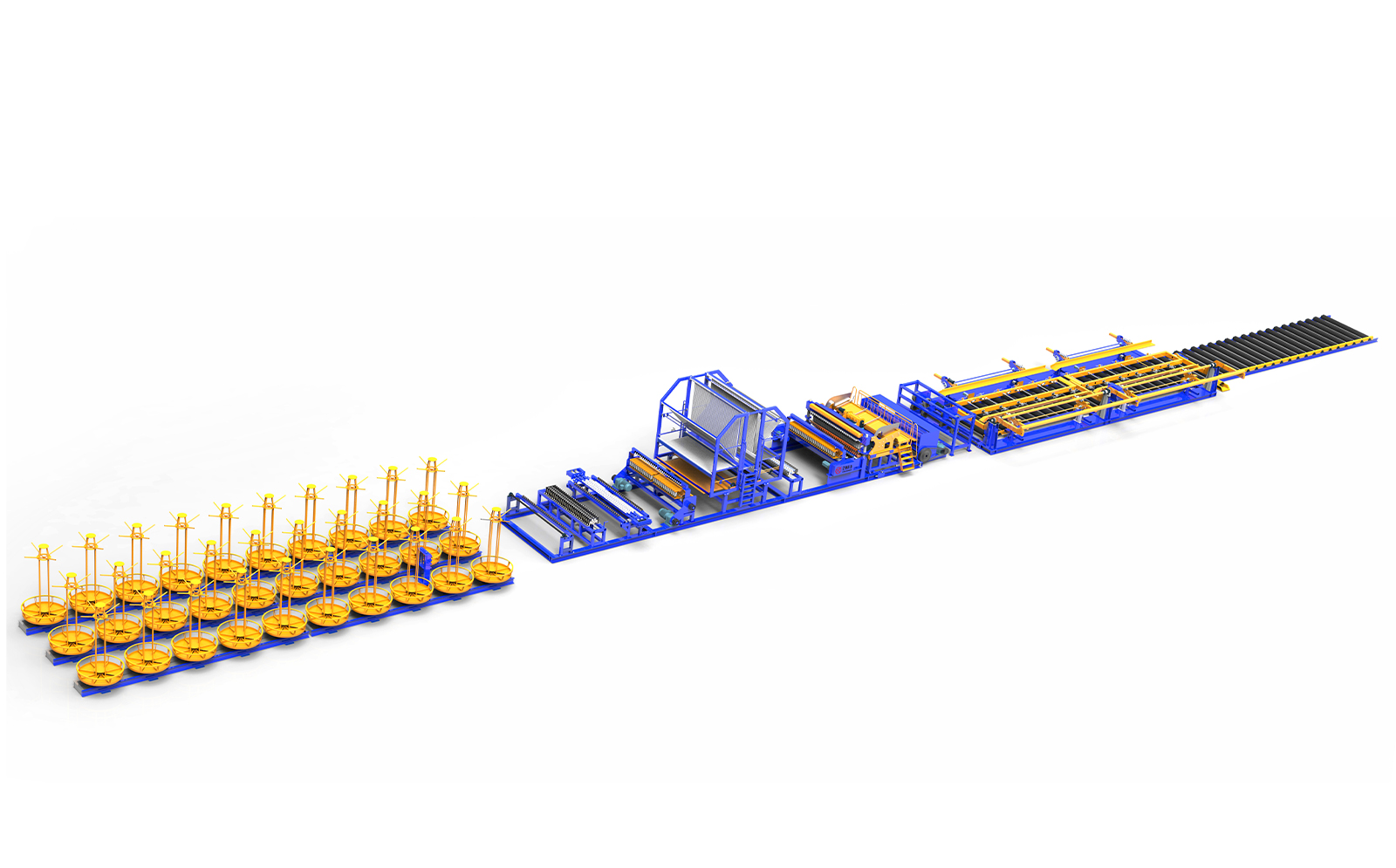
Wire mesh welding machines create metal mesh or grid by feeding wires from large rolls into the machine, which straightens the wires and positions them parallel to each other. Then, more wires are placed perpendicular to the first set, forming a grid pattern. At the points where the wires intersect, the machine welds them together, creating a strong bond. This process continues as the mesh moves through the machine, and cutters slice the long mesh into smaller, more manageable pieces. The final product is a series of wire mesh sheets, all created through a process that resembles weaving but with metal wires and welding at the intersection points.
Key Components
Wire mesh welding machines have several key parts to make sure their function:
- Welding Portal: The main area where the welding occurs.
- Feeding System: Supplies wires and frames to the welding portal.
- Control Panel: Allows operators to set parameters and monitor the process.
| Component | Function |
|---|---|
| Welding Portal | Joins wires together |
| Feeding System | Delivers materials to the welding area |
| Control Panel | Manages machine settings and operations |
Here is a sample component of our wire mesh welding machine:
● Steel mesh welding machine main unit
● Electrical control cabinet
● Operating platform
● Longitudinal wire reel
● Longitudinal wire guide frame
● Longitudinal wire storage frame
● Feeding component
● Cutting component
● Unloading frame
check out more about our wire mesh welding machine.
Key Parts of Wire Mesh Welding Machines
Usually, wire mesh welding machines can automatically process round steel coils and weld them into steel mesh sheets. It is mainly divided into 6 parts: ①, wire feeding mechanism; ②, straightening mechanism, storage feeding mechanism, and storage mechanism; ③, servo stepping, welding main machine, and transverse wire feeding; ④, cutting mechanism; ⑤, unloading mechanism; ⑥, electrical system.
Composition layout diagram
● Wire feeding mechanism: The wire feeding includes a base, a feeding disk, a braking mechanism, a wire guide frame, a wire shortage detection, etc. Bearings are installed between the base and the turntable, so that the turntable can rotate flexibly during operation. The braking mechanism can adjust the flexibility of the turntable when there is no feeding, so that the stored steel wire coil will not automatically spread out.
● Straightening mechanism, storage feeding mechanism, and storage mechanism: The straightening mechanism includes a base, a frame, straightening rollers, and a guiding mechanism. The straightening rollers include horizontal straightening rollers and vertical straightening rollers, half of which are installed on the slide block. By adjusting the rollers to the appropriate position, the purpose of straightening the steel wire can be achieved.
The storage feeding mechanism provides output power to the storage mechanism.
The storage mechanism provides sufficient stepping length for the step welding mechanism.
Main machine, transverse wire feeding frame: The main machine is the main functional part of this welding machine, including a servo, precision calibration components, transverse wire feeding components, and welding electrode components.
The functions of each component are briefly described below:
a. Servo feeding component: The steel wire is clamped by two sets of pressure rollers, driven by a servo motor, and the pressure rollers are driven to drag the steel wire and control the spacing of the transverse wires.
b. Precision calibration component: The steel wire is straightened by adjusting two sets of straightening rollers to ensure the quality of the mesh.
c. Transverse wire feeding component: This component consists of a wire feeding disk, a straightening plate, a servo traction device, a frame, a cutter, a wire throwing mechanism, etc. The coiled wire is straightened by the straightening and traction mechanism, then cut off. The cut steel bar falls into the wire throwing mechanism and is quickly sent into the electrode.
d. Welding electrode component: This component consists of a clamping cylinder, a positioning cylinder, a transverse wire detection mechanism, etc., to complete the accurate positioning and welding of the transverse wires.
● Cutting mechanism: The component that cuts the product according to the product length. The mesh spacing and cutting position can be set on the control panel according to the product specifications.
● Unloading frame: It includes a mesh pulling mechanism, a flipping mechanism, a stacking trolley, etc. The mesh pulling mechanism pulls the cut mesh out of the cutter, and places it into the stacking trolley through the flipping mechanism for transportation.
● Electrical system: The electrical system includes one high-voltage distribution cabinet, one low-voltage distribution cabinet, one operation control box, and a pneumatic circuit for welding and unloading.
Common Applications
These machines are widely used in various industries, including:
- Construction: For reinforcement steel mesh.
- Agriculture: To create fencing and animal enclosures.
- Manufacturing: For producing items like shopping carts and display stands.
Types of Wire Mesh Welding Machines
Automatic vs. Manual Machines
Automatic wire mesh machines are designed for high-volume production, allowing for faster and more efficient operations. In contrast, manual machines require more human intervention and are often used for smaller batches. Here are some key differences:
Modular Construction
Many modern wire mesh welding machines feature a modular construction. This means they can be easily adapted to meet different production needs. The modular design allows for:
- Quick changes between different mesh types
- Flexibility in production volume
- Easy upgrades and maintenance
Specialized Machines for Different Mesh Types
Different applications require different types of mesh. Specialized machines are designed to produce specific types of wire mesh, such as:
- Truss Type Welded Mesh Machines: Ideal for creating strong, structural mesh.
- Ladder Type Welded Mesh Machines: Used for making lightweight, yet durable mesh products.
- Reinforcement Steel Mesh Machines: Specifically designed for construction applications.
The choice of machine depends on the specific requirements of the project, including the type of mesh needed and the production volume.
Technology Behind Wire Mesh Welding
Alternating Current Technology
Wire mesh welding machines utilize alternating current technology to create strong and precise welds. This method focuses the current at specific points, ensuring that the welds are straight and accurate. The benefits include:
- High efficiency in production
- Reduced distortion in the final product
- Capability to work in facilities with limited power supply
Direct Current Technology
In contrast, direct current technology provides a steady flow of electricity, which can be beneficial for certain welding tasks. This technology is known for:
- Consistent weld quality
- Better control over the welding process
- Enhanced penetration in thicker materials
Medium Frequency Technology
Medium frequency technology is another option that combines the advantages of both alternating and direct current. It allows for:
- Faster welding speeds
- Improved energy efficiency
- Greater flexibility in handling different wire types
| Technology Type | Key Benefits |
|---|---|
| Alternating Current | High efficiency, reduced distortion |
| Direct Current | Consistent quality, better control |
| Medium Frequency | Faster speeds, improved efficiency |
The choice of technology depends on the specific requirements of the welding task, ensuring optimal results for various applications.
This technology enables manufacturers to produce a wide range of wire mesh products efficiently and effectively, meeting diverse market needs.
Features of Modern Wire Mesh Welding Machines
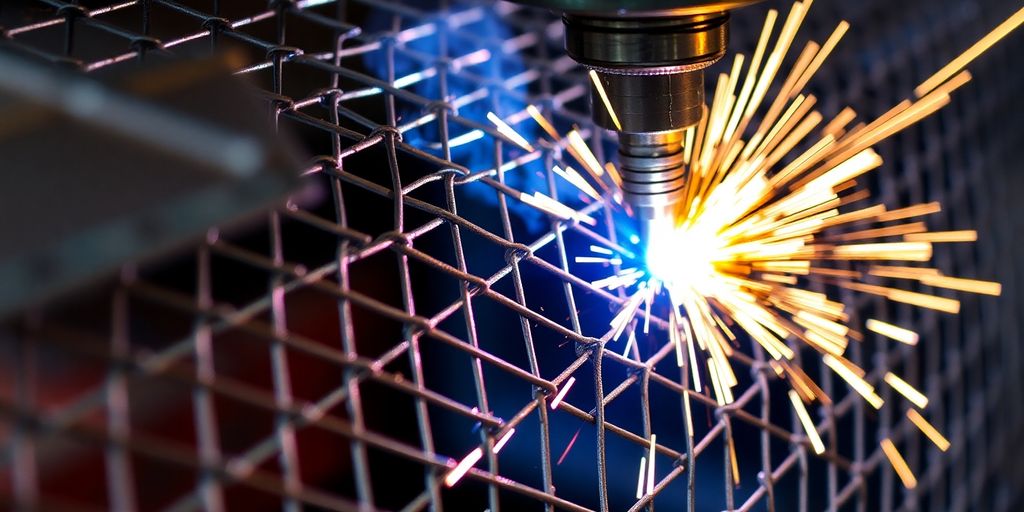
Intuitive Operator Interfaces
Modern wire mesh welding machines come equipped with user-friendly touch screens. This allows operators to easily set various welding and production parameters, making the process smoother and more efficient.
Remote Maintenance Capabilities
These machines often include remote monitoring features. This means that technicians can perform diagnostics and maintenance from afar, ensuring that any issues are addressed quickly without needing to be on-site.
Versatility in Wire Diameters and Lengths
One of the standout features is the ability to work with different wire diameters and lengths. This flexibility allows manufacturers to produce a wide range of products, from small items to larger structures.
| Feature | Specification |
|---|---|
| Welding Speed | 70-90 rows/min |
| Adjustable Longitudinal Bar Spacing | ≥75mm (stepless adjustment) |
| Adjustable Transverse Bar Spacing | ≥20mm |
The modular design of these machines allows for quick adjustments, making them suitable for both large-scale production and smaller batches.
In summary, modern wire mesh welding machines are designed with the operator in mind, offering intuitive controls, remote maintenance options, and versatility in production. These features make them essential tools in various industries.
Production Process Using Wire Mesh Welding Machines
Feeding Wires and Frames
The first step in the production process involves feeding wires and frames into the machine. This is crucial for ensuring that the welding process can proceed smoothly. Here’s how it typically works:
- Wire Preparation: Wires are straightened and cut to the required lengths.
- Frame Setup: Flat bars or frames are positioned correctly for welding.
- Loading: All materials are loaded into the machine’s feeding system.
Welding Process
Once the materials are in place, the actual welding begins. The machine uses advanced technology to create strong and precise welds. The process includes:
- Current Application: Depending on the machine type, either alternating or direct current is used to weld the wires together.
- Heat Generation: The current generates heat at the contact points, melting the wire ends to form a solid bond.
- Cooling: After welding, the mesh is allowed to cool, solidifying the welds.
Post-Welding Fabrication Steps
After the welding is complete, additional steps may be taken to finish the product. These can include:
- Punching: Creating holes or shapes as needed.
- Bending: Adjusting the mesh to fit specific designs.
- Quality Check: Inspecting the final product for any defects.
The wire mesh making machine encompasses the entire production process from raw material to finished mesh, widely used in the manufacturing of fence mesh.
This structured approach ensures that the final product meets quality standards and is ready for various applications.
Advantages of Using Wire Mesh Welding Machines
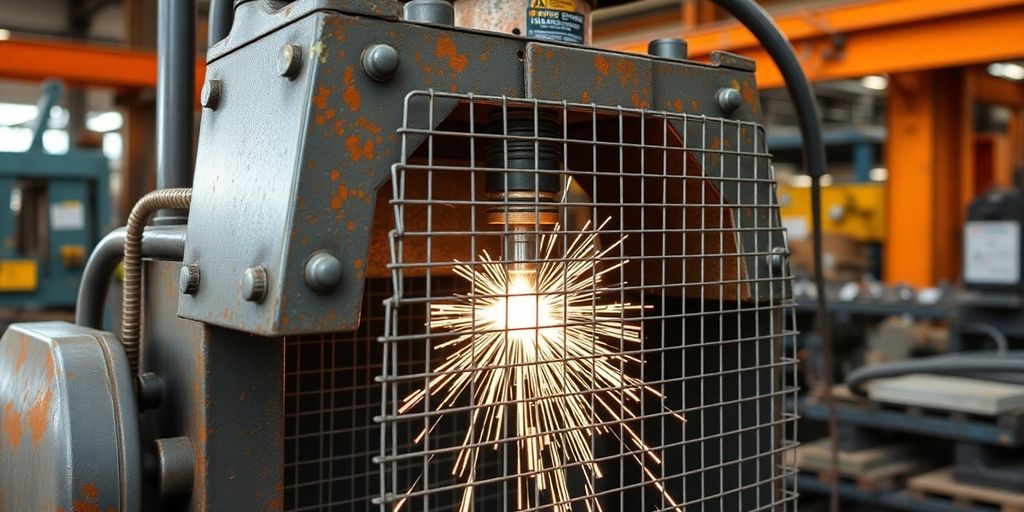
Efficiency and Speed
Wire mesh welding machines are designed to operate quickly, allowing for high production rates. This means that manufacturers can produce large quantities of mesh in a shorter time. Here are some key points:
- Fast welding cycles reduce overall production time.
- Automated processes minimize manual labor.
- Consistent output quality ensures fewer defects.
Precision and Accuracy
These machines provide a high level of precision in the welding process. This is crucial for creating strong and reliable mesh products. Some benefits include:
- Accurate dimensions lead to better fitting products.
- Reduced material waste due to precise cuts.
- Enhanced strength of welded joints, ensuring durability.
Flexibility in Production
Wire mesh welding machines offer great flexibility, making them suitable for various applications. This flexibility includes:
- Ability to work with different wire diameters and lengths.
- Capability to produce various mesh types, from industrial to decorative.
- Quick adjustments for different production runs, accommodating both large and small batches.
The versatility of wire mesh welding machines allows manufacturers to adapt to changing market demands efficiently.
| Feature | Benefit |
|---|---|
| High Speed | Increased production rates |
| Precision Welding | Reduced defects and waste |
| Flexible Design | Adaptable to various applications |
Applications of Wire Mesh Welding Machines
Industrial and Fence Mesh
Wire mesh welding machines are essential in creating industrial and fence mesh. These machines produce strong and durable mesh that is used in various sectors. Common applications include:
- Fencing for security in residential and commercial areas.
- Industrial mesh for use in warehouses and factories.
- Reinforcement in construction projects, ensuring stability and safety.
Reinforcement Steel Mesh
Another significant application is in the production of reinforcement steel mesh. This type of mesh is crucial for:
- Concrete footpaths
- Industrial and commercial ground slabs
- Precast panel construction
- Residential slabs and footings
Consumer Goods and Appliances
Wire mesh welding machines also play a vital role in manufacturing various consumer goods and appliances. Examples include:
- Oven and stove grates
- Refrigerator shelves
- Dishwasher baskets
- Shopping carts
Wire mesh welding machines are versatile tools that cater to a wide range of industries, making them indispensable in modern manufacturing.
Conclusion
In summary, a wire mesh welding machine is a vital tool in many industries. It helps create strong and precise wire mesh products used in various applications, from fences to kitchen appliances. These machines use advanced technology to ensure that the welding process is efficient and accurate. With their modular design, they can adapt to different production needs, making them suitable for both large and small projects. Overall, wire mesh welding machines play a crucial role in modern manufacturing, providing flexibility and reliability for businesses.


