
Modern galvanized welded mesh fence production has seen a significant shift towards automation, with precision robotics playing a central role. These robotic systems are not just about moving parts around; they are integrated units capable of performing complex tasks with high accuracy. The deployment of multi-axis robotic arms, equipped with advanced vision systems, allows for the precise manipulation of wire strands, ensuring accurate placement and consistent spacing before the welding process. This level of precision minimizes material waste and improves the overall structural integrity of the mesh. Furthermore, these robots can handle various wire diameters and mesh configurations without extensive retooling, which makes production lines more flexible. The programming of these robots involves sophisticated algorithms that optimize movement paths and reduce cycle times, leading to higher output rates. The ability to maintain tight tolerances across large production runs is a key benefit, as it ensures that each mesh panel meets stringent quality standards.
Integrated Control Systems for Enhanced Efficiency
The efficiency of automated galvanized welded mesh fence machines is largely dependent on their integrated control systems. These systems act as the central nervous system, coordinating all operational aspects from wire feeding to welding and final stacking. They typically incorporate Programmable Logic Controllers (PLCs) and Human-Machine Interfaces (HMIs), which provide operators with real-time data and intuitive control over the production process. The integration extends to various sensors that monitor parameters such as wire tension, welding current, and temperature, allowing for immediate adjustments to maintain optimal conditions. This interconnectedness reduces the need for manual intervention, thereby minimizing human error and increasing throughput. For example, an automatic mesh welding production line can adjust its parameters on the fly based on feedback from these sensors, ensuring consistent weld quality and mesh dimensions. The data collected by these systems can also be used for long-term performance analysis and process optimization, contributing to continuous improvement in manufacturing efficiency.
Real-time Diagnostics and Predictive Maintenance
One of the most impactful advancements in automated galvanized welded mesh fence machine technology is the incorporation of real-time diagnostics and predictive maintenance capabilities. These features move beyond traditional reactive maintenance by anticipating potential equipment failures before they occur. Sensors embedded throughout the machine continuously collect data on component performance, such as motor vibrations, bearing temperatures, and electrical current fluctuations. This data is then analyzed by sophisticated software algorithms, often employing machine learning, to identify patterns indicative of impending issues. When a potential problem is detected, the system can alert operators, recommend specific maintenance actions, or even automatically schedule downtime for repairs. This proactive approach significantly reduces unexpected breakdowns, minimizes production interruptions, and extends the lifespan of critical components. For instance, a system might detect an abnormal vibration in a wire feeding mechanism, prompting a technician to inspect and replace a worn part before it causes a complete stoppage. This capability is crucial for maintaining high operational uptime and ensuring the continuous production of automatical line wire feeding construction mesh. The benefits include reduced maintenance costs, improved safety, and a more reliable manufacturing process overall.
Novel Material Integration in Galvanized Welded Mesh Fence Production
High-Strength Alloy Applications in Mesh Manufacturing
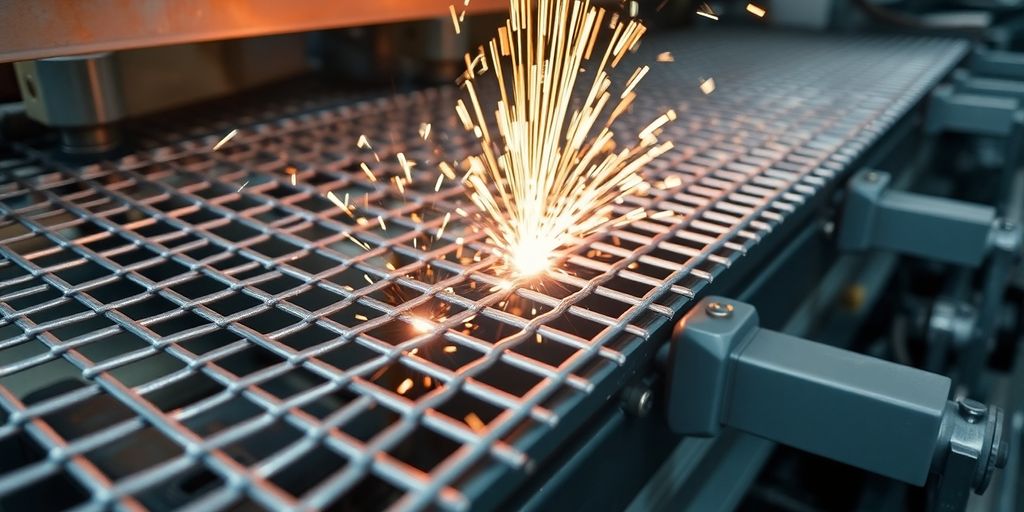
When it comes to making galvanized welded mesh fences, using high-strength alloys is a big deal. These special metals, like certain steel alloys, are chosen because they can handle a lot of stress without breaking. This means the fences made from them are super tough and last a long time, even in harsh conditions. Think about fences that need to stand up to strong winds or heavy impacts – that’s where these alloys shine. They make the mesh stronger, which is important for things like security fences or barriers that need to be really reliable. The way these alloys are processed also matters a lot. Manufacturers have to be careful with how they heat and cool the metal, and how they form it into wire, to make sure it keeps its strength. It’s a precise process that helps make sure the final product is top-notch. This focus on material science is a key part of modern mesh welding advancements.
Corrosion-Resistant Coatings for Extended Durability
Making galvanized welded mesh fences last a long time, especially when they’re outside, means they need to fight off rust and corrosion. That’s where corrosion-resistant coatings come in. While galvanization itself is a great start, adding extra layers of protection can make a huge difference. These coatings can be things like specialized polymers or even other metallic layers applied over the zinc. They create an extra barrier that stops moisture and chemicals from getting to the metal underneath. This is really important for fences in places with a lot of rain, salt in the air (like near the ocean), or industrial areas where there might be corrosive substances. The goal is to make the fence practically immune to the elements, so it stays strong and looks good for many years without needing a lot of upkeep. It’s all about making the product as durable as possible.
Sustainable Material Sourcing and Processing
These days, everyone is thinking about how things affect the environment, and making galvanized welded mesh fences is no different. Companies are really trying to find materials that are sourced responsibly and processed in ways that don’t harm the planet. This means looking for suppliers who get their raw materials, like iron ore and zinc, in an ethical way, maybe even from recycled sources. It also involves making sure the manufacturing process itself uses less energy and produces less waste. For example, some factories are using more efficient machines or finding ways to recycle scrap metal from their own production lines. The idea is to create a product that’s not just strong and durable, but also has a smaller environmental footprint. This includes considering the entire life cycle of the fence, from where the materials come from to what happens to the fence when it’s no longer needed. It’s a big shift towards being more eco-friendly in the industry, and it’s becoming a major factor in how wire mesh welding machine operations are run.
Optimized Welding Methodologies for Galvanized Welded Mesh Fence Machines
Welding is a big deal when you’re making galvanized welded mesh fences. It’s not just about sticking wires together; it’s about making sure those connections are super strong and will last a long time, especially since these fences are out in the elements. Getting the welding just right means the fence will hold up, look good, and do its job for years. It’s a key part of making a quality product.
Pulsed Arc Welding Techniques for Superior Joint Integrity
Pulsed arc welding is a pretty cool way to join metals, especially when you need really strong connections. Instead of a steady stream of power, it uses quick bursts, or pulses, of electricity. This pulsing helps control the heat better, which is a big deal for galvanized materials. When you’re welding galvanized stuff, you’ve got that zinc coating, and too much heat can mess it up, causing fumes or making the weld weak. With pulsed arc welding, you can get a deep, strong weld without overheating the zinc, which means less spatter and a cleaner, tougher joint. It’s all about getting that perfect balance of heat to make sure the weld is solid and the galvanized coating stays intact. Welding techniques for woven wire mesh are always evolving, and pulsed arc welding is a prime example of how technology improves joint integrity.
Resistance Welding Parameter Optimization
Resistance welding is another common method for making mesh, and it’s all about getting the settings just right. You’re basically pushing two pieces of metal together and running a current through them, and the resistance creates heat that melts them together. But it’s not as simple as just turning it on. You have to figure out the perfect amount of current, how long to apply it, and how much pressure to use. If any of those are off, the weld won’t be strong. Too little heat, and it won’t stick; too much, and you burn through the material. It’s a delicate balance, and getting it right means consistent, strong welds every time. This fine-tuning is what makes the difference between a flimsy fence and one that can really take a beating.
Non-Destructive Testing Protocols for Weld Quality Assurance
Once you’ve done all that welding, how do you know it’s actually good? That’s where non-destructive testing (NDT) comes in. Instead of breaking the fence apart to check the welds, NDT methods let you inspect them without causing any damage. Think of it like getting an X-ray of the weld. You can use things like ultrasonic testing, where sound waves go through the weld to find any hidden flaws, or visual inspection, where trained eyes look for surface defects. There’s also eddy current testing, which uses electromagnetic fields to detect cracks. These tests are super important because they catch any problems early on, before the fence even leaves the factory. This way, you can be sure that every single weld is up to snuff, and the final product is strong and reliable. YZ Welding’s electric welded mesh machines often incorporate these advanced testing protocols to ensure top-notch quality.
Enhanced Throughput and Production Scalability in Galvanized Welded Mesh Fence Machine Operations
Achieving high throughput and production scalability is a primary goal in the manufacturing of galvanized welded mesh fences. This involves optimizing various aspects of the machine’s operation to ensure continuous, efficient output and the ability to adapt to varying production demands. The integration of advanced mechanical and control systems plays a significant role in realizing these objectives.
High-Speed Wire Feeding and Mesh Forming Mechanisms
High-speed wire feeding and mesh forming mechanisms are fundamental to increasing the production rate of galvanized welded mesh fence machines. These systems are engineered to handle wire coils rapidly, ensuring a constant supply to the welding stations. The precision and speed of these mechanisms directly influence the overall output capacity of the machine. Modern machines use sophisticated servo-driven systems that allow for quick and accurate wire positioning, minimizing delays between welding cycles. This capability is crucial for maintaining a steady flow of material and maximizing the number of mesh panels produced per unit of time. The design of the forming mechanisms also contributes significantly; they must be robust enough to withstand continuous high-speed operation while maintaining dimensional accuracy of the mesh. For example, some machines can produce a significant number of mesh panels per hour, as shown in the table below:
| Mesh Panel Size (m) | Panels per Hour |
|---|---|
| 1.5 x 2.5 | 120 |
| 2.0 x 3.0 | 90 |
| 2.5 x 4.0 | 70 |
These advancements in rebar mesh welding machines allow for faster production cycles.
Modular Design for Production Line Flexibility
Modular design principles are increasingly applied to galvanized welded mesh fence machines to provide production line flexibility. This approach involves constructing machines from independent, interchangeable modules, each responsible for a specific function, such as wire straightening, welding, or cutting. The benefits of a modular design include:
- Rapid Configuration Changes: Modules can be quickly swapped or reconfigured to produce different mesh sizes or patterns, reducing downtime associated with product changeovers.
- Simplified Maintenance: Individual modules can be serviced or replaced without affecting the operation of the entire machine, leading to quicker repairs and higher uptime.
- Scalability: Production capacity can be easily expanded by adding more modules as demand increases, allowing manufacturers to scale their operations efficiently.
This modularity allows manufacturers to adapt their production lines to diverse market needs, from standard fence panels to custom mesh configurations. The ability to quickly adjust to different product specifications is a key factor in maintaining competitiveness in a dynamic market.
Automated Material Handling and Stacking Systems
Automated material handling and stacking systems are essential for optimizing the flow of materials and finished products within a galvanized welded mesh fence production line. These systems reduce manual labor, improve safety, and prevent damage to the finished mesh. Key components often include:
- Automated Wire Coil Loading: Robotic arms or conveyor systems automatically load wire coils onto the machine, ensuring a continuous supply without manual intervention.
- Mesh Panel Transfer: Robotic grippers or automated conveyors move finished mesh panels from the welding station to subsequent processing stages, such as galvanizing or packaging.
- Automated Stacking and Bundling: Robotic systems precisely stack finished mesh panels into bundles, preparing them for storage or shipment. This ensures consistent stack heights and reduces the risk of damage.
These automated systems contribute to a more streamlined and efficient production process, minimizing bottlenecks and maximizing throughput. The integration of these systems also helps in managing the output of various types of wire mesh effectively.
Energy Efficiency and Environmental Sustainability in Galvanized Welded Mesh Fence Machine Technology
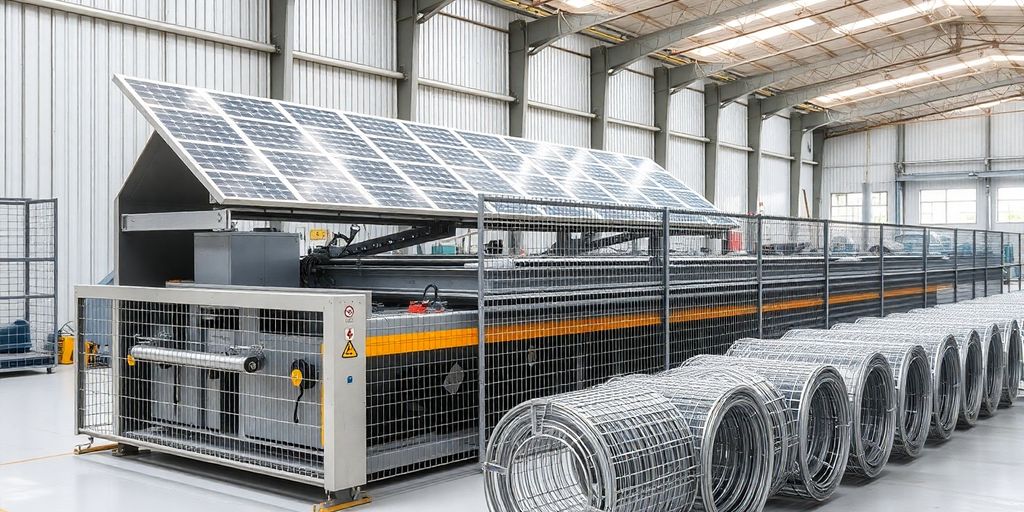
Modern manufacturing processes, especially those involving galvanized welded mesh fence machines, are increasingly focused on reducing their environmental footprint. This involves a multi-faceted approach that considers energy consumption, waste generation, and the overall life cycle of the products. The goal is to create a production system that is not only efficient but also responsible.
Reduced Energy Consumption in Welding Processes
Reducing energy consumption in welding processes is a key area for improving environmental sustainability. Traditional welding methods often use a lot of power, leading to higher operational costs and a bigger carbon footprint. Newer galvanized welded mesh fence machine designs incorporate advanced power management systems and more efficient welding technologies to cut down on energy use. For example, some machines now use inverter-based power sources, which are much more efficient than older transformer-based systems. Also, optimizing welding parameters, like current and voltage, for each specific material and mesh configuration can lead to significant energy savings. This means the machines only use the power they need, avoiding waste. Furthermore, the use of pulsed welding techniques can reduce heat input, which not only saves energy but also improves weld quality and reduces material distortion. This focus on energy efficiency helps lower operating costs for manufacturers and contributes to a greener production process. For more information on how these machines contribute to sustainable manufacturing, check out this page on sustainable manufacturing practices.
Waste Minimization and Recycling Protocols
Waste minimization and recycling are very important for environmental sustainability in galvanized welded mesh fence production. The manufacturing process can create various types of waste, including scrap metal, off-cuts, and packaging materials. Implementing effective waste management strategies is essential to reduce landfill contributions and conserve resources. This involves:
- Source Reduction: Designing mesh patterns and production schedules to minimize material off-cuts and scrap. This means planning out how the mesh is cut and formed so there’s as little leftover material as possible.
- On-site Recycling: Setting up systems to collect and process scrap metal directly at the manufacturing facility. This allows for the immediate reintroduction of materials into the production cycle or their sale to recycling companies.
- Material Segregation: Separating different types of waste materials (e.g., steel, zinc coatings, plastics from packaging) to make recycling more efficient and effective. This ensures that materials can be properly recycled without contamination.
These protocols not only reduce environmental impact but can also lead to cost savings by reducing waste disposal fees and potentially generating revenue from recycled materials. The goal is to create a circular economy where materials are reused as much as possible.
Life Cycle Assessment of Galvanized Welded Mesh Fence Production
A life cycle assessment (LCA) is a thorough evaluation of the environmental impacts of a product throughout its entire life, from raw material extraction to disposal. For galvanized welded mesh fence production, an LCA helps identify areas where environmental performance can be improved. This includes looking at:
- Raw Material Acquisition: Assessing the environmental impact of mining and processing the steel and zinc used in the mesh. This involves looking at energy use, water consumption, and pollution generated during these initial stages.
- Manufacturing Processes: Evaluating the energy consumption, emissions, and waste generation during the actual production of the mesh, including welding, galvanizing, and forming. This is where the advanced fence mesh welding machine plays a big role in efficiency.
- Transportation and Distribution: Considering the environmental impact of moving raw materials to the factory and finished products to customers. This includes fuel consumption and emissions from trucks or other transport methods.
- Use Phase: While galvanized welded mesh fences are generally durable, the LCA considers any environmental impacts during their service life, such as maintenance or potential corrosion.
- End-of-Life Management: Analyzing the environmental impact of disposing of or recycling the mesh at the end of its useful life. This includes whether the materials can be recycled and the energy required for that process.
By conducting an LCA, manufacturers can gain a complete picture of their product’s environmental footprint and make informed decisions to reduce it. This holistic approach helps in developing more sustainable products and processes, leading to a better environmental outcome overall.
Advanced Quality Control and Assurance in Galvanized Welded Mesh Fence Manufacturing
Vision Systems for Defect Detection
Modern manufacturing of galvanized welded mesh fences relies heavily on advanced vision systems to ensure product quality. These systems use high-resolution cameras and sophisticated image processing algorithms to scan the mesh for various defects. This includes things like missing welds, misaligned wires, or even surface imperfections on the galvanization. The ability to detect these flaws in real-time is a big step forward for quality control. These systems can operate at very high speeds, which means they can keep up with fast production lines without slowing things down. When a defect is found, the system can flag the faulty section, or even stop the machine, so that the problem can be fixed right away. This helps to reduce waste and makes sure that only good products make it out the door. It’s a lot more reliable than having people try to spot these tiny issues by eye, especially over long shifts.
Automated Dimensional Verification
Making sure that galvanized welded mesh fences are the right size is super important. Automated dimensional verification systems use things like laser sensors or optical scanners to measure the mesh precisely. They check things like the spacing between wires, the overall width and length of the mesh panels, and even the diameter of the wires themselves. This kind of automated checking is much more accurate and consistent than manual measurements, which can vary a lot depending on who’s doing the measuring. These systems can compare the actual measurements to the design specifications and immediately identify any deviations. If something is off, the system can alert operators or even adjust machine settings automatically to correct the issue. This helps to maintain tight tolerances and ensures that every piece of mesh meets the required dimensions, which is really important for things like construction projects where exact sizes matter a lot. For example, a fully automatic flexible reinforcement mesh welding production line would benefit greatly from this kind of precision.
Statistical Process Control for Consistent Product Quality
Statistical Process Control (SPC) is a method that uses statistical tools to monitor and control a manufacturing process. In the context of galvanized welded mesh fence production, SPC involves collecting data from various stages of the manufacturing process, like welding parameters, wire tension, and galvanization thickness. This data is then analyzed to identify any trends or variations that might indicate a problem. By using control charts, manufacturers can see if the process is operating within acceptable limits or if it’s starting to drift out of control. This proactive approach helps to prevent defects from happening in the first place, rather than just catching them after they’ve occurred. It’s all about making sure the process is stable and predictable, which leads to more consistent product quality over time. Many of the top 10 manufacturers of wire mesh welding machines use SPC to ensure their products are reliable. Here are some key aspects of SPC in this industry:
- Data Collection: Gathering measurements on critical parameters like weld strength, mesh dimensions, and coating thickness.
- Control Charts: Visualizing process data over time to identify trends and out-of-control points.
- Process Adjustment: Making timely adjustments to machine settings or raw material inputs based on SPC analysis.
- Root Cause Analysis: Investigating the reasons behind any process deviations to prevent recurrence.
- Continuous Improvement: Using SPC data to identify opportunities for optimizing the manufacturing process and improving overall quality.
Ergonomic Design and Operator Interface in Galvanized Welded Mesh Fence Machines
Intuitive Human-Machine Interface Development
Developing an intuitive human-machine interface (HMI) is a big deal for modern galvanized welded mesh fence machines. It’s all about making the machine easy to use, so operators can get things done without a lot of fuss. A good HMI means clear visuals, simple controls, and feedback that makes sense. Think about touchscreens with big, easy-to-read buttons and graphics that show what’s happening in real-time. This kind of setup helps reduce mistakes and makes the whole operation smoother. When the interface is easy to understand, operators can learn faster and work more efficiently. It’s like having a really good map when you’re driving somewhere new – it just makes the trip less stressful. The goal is to make the machine feel like a natural extension of the operator, not some complicated puzzle. This is especially important for automatic mesh welding machine components, where many different parts need to work together.
Safety Interlocks and Protective Measures
Safety is a top priority in any industrial setting, and galvanized welded mesh fence machines are no different. Implementing robust safety interlocks and protective measures is essential to prevent accidents and ensure operator well-being. These systems are designed to stop the machine or prevent certain actions if a dangerous situation is detected. For example, if a safety guard is opened while the machine is running, an interlock will immediately shut it down. This isn’t just about following rules; it’s about keeping people safe. Things like emergency stop buttons, light curtains, and pressure-sensitive mats are all part of this safety net. They create a secure working environment, which helps operators feel more confident and focused on their tasks. It’s a bit like having a really good alarm system for your house – it gives you peace of mind. These measures are critical for any industrial equipment, including those used in China steel cage welded wire mesh welding machine operations.
Reduced Operator Intervention and Training Requirements
Modern galvanized welded mesh fence machines are designed to minimize the need for constant operator involvement. This means less manual adjustment and more automated processes. When a machine can handle more tasks on its own, operators don’t have to spend as much time making small changes or fixing minor issues. This also cuts down on the amount of training needed, because the machine is doing a lot of the heavy lifting. Instead of learning every tiny detail of the machine’s inner workings, operators can focus on understanding the overall process and how to manage exceptions. It’s like driving a car with cruise control – you still need to pay attention, but you don’t have to constantly adjust the speed. This approach makes it easier to bring new people up to speed and helps keep production running smoothly with fewer interruptions. Less intervention means more consistent output and a more relaxed work environment for everyone involved.
Conclusion
So, what’s the big takeaway here? Well, it looks like galvanized welded mesh fence machine tech is really moving forward. We’ve seen some cool new stuff, like machines that can do more on their own and use less energy. This means making fences is getting better, faster, and maybe even cheaper. It’s pretty clear that these changes are good for everyone involved, from the folks making the fences to the people who buy them. The future of fence making seems pretty bright, with more improvements probably coming down the line.


