
When you’re looking at high-speed steel wire mesh welding machines, one of the biggest things that changes the price is what kind of material it can handle and how thick the wires are. Machines that can weld a wider variety of materials, like different types of steel or even some non-ferrous metals, usually cost more. It’s not just about the material itself, but also the specific properties of that material, like its tensile strength and conductivity, which affect how the machine needs to be built. For example, welding high-carbon steel is a lot different than welding mild steel, and the machine needs to be much more robust and precise to handle it. The same goes for wire diameter. A machine designed to weld very thin wires, say 2mm, is different from one that can handle thick wires, like 6mm, or even a range of both. Machines that can handle a broader range of wire diameters and material compositions often come with a higher price tag because they need more advanced welding technology and stronger components. This is because the welding current, pressure, and cooling systems all need to be adjustable and powerful enough to accommodate these variations. If a machine can only do one specific wire size and material, it’ll probably be cheaper, but it’s also less versatile for future projects.
Operational Speed And Production Capacity
Another big factor in how much these machines cost is how fast they can make mesh and how much they can produce in a given time. Think about it: a machine that can churn out mesh at 100 strokes per minute is going to be more expensive than one that only does 50 strokes per minute. This isn’t just about the speed of the welding process itself, but also how quickly the wires can be fed, positioned, and cut. Higher operational speeds usually mean more sophisticated mechanical and electrical systems, including faster servo motors, more responsive control systems, and more durable components that can withstand constant, rapid movement. Production capacity is directly tied to this speed, but also to the width of the mesh the machine can produce and the number of line wires it can weld simultaneously. A machine that can weld a wider mesh with more wires at a high speed will naturally be more expensive because it requires a larger footprint, more welding heads, and a more powerful electrical system. For example, an automatical line wire feeding construction mesh welding machine designed for high output will have a different price point than a smaller, slower model. It’s all about how much mesh you need to make and how fast you need to make it.
Automation Level And Control System Sophistication
The level of automation and how fancy the control system is also plays a huge role in the price. Basic machines might require a lot of manual input, like loading wires by hand or adjusting settings physically. But more advanced machines can do a lot of these things automatically. This includes automatic wire feeding, automatic mesh cutting, and even self-diagnosis of problems. The control system is the brain of the machine, and a more sophisticated one means more precise control over the welding process, better quality mesh, and less need for human intervention. These systems often use programmable logic controllers (PLCs) or industrial PCs with custom software. They might also include features like:
- Touchscreen interfaces for easy operation.
- Data logging and reporting capabilities for production analysis.
- Remote diagnostics and troubleshooting.
- Integration with other factory systems for a fully automated production line.
An automatic mesh welding machine with a high level of automation and a complex control system will definitely cost more upfront, but it can save a lot of money in labor costs and reduce errors over time. It’s a trade-off between the initial investment and the long-term operational benefits.
Technological Advancements And Cost Implications In High Speed Steel Wire Mesh Welding Machines
Integration Of Advanced Welding Technologies
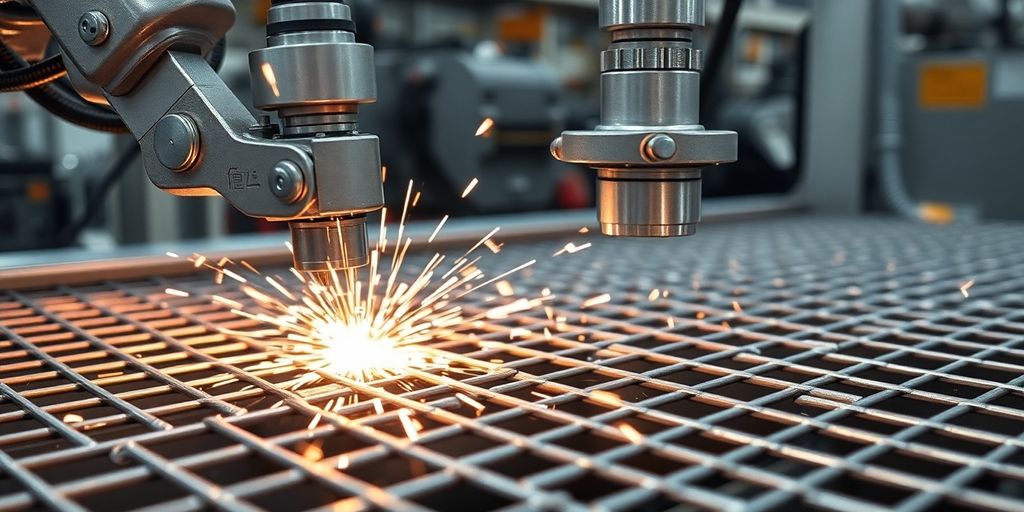
Modern high-speed steel wire mesh welding machines have seen significant advancements in their core welding technologies. These improvements are not just about speed; they also focus on weld quality, consistency, and the ability to handle a wider range of materials and wire diameters. For example, some machines now use medium-frequency direct current (MFDC) welding, which offers better energy efficiency and more precise heat control compared to traditional alternating current (AC) systems. This precision helps in creating stronger, more uniform welds, reducing material waste, and improving the overall structural integrity of the mesh. Another notable development is the integration of multi-spot welding heads, allowing for several welds to be made simultaneously, which dramatically increases production output. The adoption of these advanced welding techniques, while initially increasing the machine’s purchase price, often leads to lower operational costs over time due to reduced energy consumption and fewer defective products. The ability to produce high-quality welds consistently also means less post-welding processing, further contributing to cost savings. These technological leaps are critical for manufacturers aiming to meet stringent quality standards and high production demands in the competitive market.
Precision Engineering And Component Durability
The cost of high-speed steel wire mesh welding machines is also heavily influenced by the level of precision engineering and the durability of their components. Machines built with high-grade materials and manufactured to tight tolerances tend to have a higher upfront cost. However, this investment often translates into a longer operational lifespan, reduced downtime for repairs, and consistent performance. Key components, such as welding electrodes, wire feeding mechanisms, and cutting tools, are now designed for extended wear and tear, often incorporating specialized alloys or coatings to resist abrasion and heat. For instance, advancements in electrode materials mean they can withstand more welding cycles before needing replacement, directly impacting maintenance costs. The precision in assembly ensures that all moving parts operate smoothly, minimizing friction and wear. This focus on durability and precision engineering is a major factor in the overall cost structure, as it directly affects the machine’s reliability and long-term operational efficiency. Manufacturers are increasingly investing in robust designs to ensure their machines can handle continuous, high-volume production without frequent breakdowns. This commitment to quality in manufacturing processes and material selection is a primary driver of the machine’s price.
Energy Efficiency And Power Consumption Metrics
Energy efficiency has become a critical consideration in the design and operation of high-speed steel wire mesh welding machines, directly impacting their cost implications. As energy prices fluctuate and environmental regulations become stricter, manufacturers are developing machines that consume less power while maintaining or even increasing production output. This involves optimizing transformer designs, implementing advanced power management systems, and utilizing more efficient welding processes like MFDC. For example, some machines now feature regenerative braking systems that capture energy during certain operational phases and feed it back into the grid, further reducing consumption. The power consumption metrics are often a key selling point, as lower energy usage translates into significant operational savings over the machine’s lifespan. Buyers are increasingly looking at the total cost of ownership, where energy efficiency plays a substantial role. Machines with superior energy efficiency might have a higher initial purchase price, but their reduced electricity bills can quickly offset this difference. This trend is also driven by a global push towards sustainable manufacturing practices. For more information on how to improve welding speed, consider exploring rebar mesh welding machines. Understanding the operational aspects of these machines, such as how a China steel cage welded wire mesh welding machine works, can also provide valuable insights into their energy consumption profiles. The following table illustrates typical power consumption ranges for different machine types:
| Machine Type | Power Consumption (kVA) | Energy Efficiency Rating (1-5 stars) |
|---|---|---|
| Standard AC Welder | 150-300 | 2 |
| MFDC Welder | 100-200 | 4 |
| Servo-Driven Welder | 80-150 | 5 |
This table highlights how newer technologies, like MFDC and servo-driven systems, offer better energy efficiency, which can lead to substantial long-term savings. The initial investment in these more efficient machines is often justified by the reduced operational expenses.
Configurational Variations And Their Impact On High Speed Steel Wire Mesh Welding Machine Price
Standard Versus Customized Machine Specifications
The price of a high-speed steel wire mesh welding machine is significantly affected by whether it is a standard model or a customized one. Standard machines are mass-produced, which means their design and components are uniform. This uniformity allows manufacturers to achieve economies of scale, reducing production costs per unit. As a result, standard machines typically come with a lower initial purchase price. They are designed to meet general industry requirements, offering a balance of features and performance suitable for a wide range of applications. However, their fixed specifications might not perfectly align with the unique operational demands or specific product outputs of every buyer. For instance, a standard machine might have a set wire diameter range or mesh size capability that is either too broad or too narrow for a particular niche application.
Conversely, customized machines are built to order, tailored to precise client specifications. This can include modifications to the welding head configuration, the integration of specialized wire feeding systems, or adjustments to the machine’s overall dimensions to fit a specific factory layout. The process of customization involves additional engineering design, specialized component sourcing, and often, a more intricate assembly process. These factors contribute to a higher manufacturing cost, which is then reflected in the machine’s selling price. While the upfront investment for a customized machine is greater, it often provides a more efficient and precise solution for specific production needs, potentially leading to higher long-term productivity and reduced waste. The decision between a standard and customized machine often hinges on a detailed cost-benefit analysis, weighing the initial expenditure against the potential gains in operational efficiency and product quality.
Inclusion Of Ancillary Equipment And Modules
The total cost of a high-speed steel wire mesh welding machine extends beyond the core welding unit itself, often encompassing various ancillary equipment and modules. These additional components are designed to enhance the machine’s functionality, automate processes, or improve the quality and consistency of the final product. The inclusion of such modules can significantly impact the overall price. Common ancillary equipment includes:
- Automatic Wire Straightening and Cutting Units: These units prepare the raw wire coils by straightening and cutting them to precise lengths before they enter the welding machine. This automation reduces manual labor and improves material preparation accuracy.
- Mesh Coiling or Stacking Systems: For continuous production, coiling systems automatically roll the finished mesh into coils, while stacking systems arrange mesh panels into neat stacks. These systems streamline post-welding handling.
- Quality Control and Inspection Modules: Integrated sensors and vision systems can monitor welding parameters and inspect the mesh for defects in real-time, ensuring consistent product quality and reducing scrap rates.
- Material Handling Systems: Automated loaders and unloaders can feed raw materials into the machine and remove finished products, further reducing manual intervention and increasing throughput.
Each of these modules adds to the complexity and cost of the overall system. Buyers must evaluate their specific production requirements and budget to determine which ancillary components are necessary for their operations. While these additions increase the initial investment, they often lead to substantial improvements in efficiency, labor savings, and product quality, justifying the higher price point.
Scalability And Future Expansion Capabilities
The design of a high-speed steel wire mesh welding machine with an eye towards scalability and future expansion capabilities can also influence its price. Machines built with inherent expandability are often more expensive initially, but they offer significant long-term advantages. Scalability refers to the machine’s ability to increase its production capacity or adapt to changing production demands without requiring a complete replacement. This might involve a modular design where additional welding heads, wire feeders, or automation components can be integrated later.
For example, a machine might be purchased with a base configuration, but its control system and structural design are robust enough to support the addition of more welding transformers or a wider mesh production capability in the future. This foresight in design allows businesses to grow their operations incrementally, spreading out capital expenditures over time. The initial higher cost reflects the engineering and manufacturing complexity involved in creating a system that is not only functional today but also adaptable for tomorrow’s needs. Investing in a scalable machine can prevent the need for a costly full machine replacement as production requirements evolve, making it a strategic long-term investment. For those looking into electric welded mesh machines, considering their future needs is key. Similarly, understanding various welding techniques for woven wire mesh can inform decisions about machine adaptability.
Maintenance And Operational Expenditure For High Speed Steel Wire Mesh Welding Machines
Consumable Component Lifespan And Replacement Costs
Maintaining high-speed steel wire mesh welding machines involves understanding the lifespan and associated replacement costs of their consumable components. These components, such as welding electrodes, wire guides, and cutting blades, experience wear and tear proportional to machine utilization and the properties of the materials being processed. The frequency of replacement directly impacts operational expenditure. For instance, welding electrodes, typically made from copper alloys, degrade over time due to heat and pressure, necessitating periodic replacement to maintain weld quality and consistency. Wire guides, crucial for precise wire feeding, can wear down, leading to misalignments and production inefficiencies. Similarly, cutting blades, essential for accurate mesh sizing, dull with use, requiring sharpening or replacement. Proactive monitoring of these components and adherence to manufacturer-recommended replacement schedules are vital for minimizing unexpected downtime and maintaining optimal machine performance. The cost of these consumables can vary significantly based on material quality, supplier, and machine model, making it a substantial factor in the overall operational budget.
Preventative Maintenance Scheduling And Service Agreements
Preventative maintenance is a cornerstone of efficient and cost-effective operation for high-speed steel wire mesh welding machines. Establishing a rigorous preventative maintenance schedule is not merely a recommendation but a necessity to mitigate unforeseen breakdowns and extend the machine’s operational life. This schedule typically includes routine inspections, lubrication of moving parts, calibration of welding parameters, and cleaning of critical components. Many manufacturers offer service agreements that provide structured maintenance plans, often including regular visits from certified technicians, software updates, and priority support. While these agreements represent an upfront cost, they can lead to substantial savings by preventing major repairs, reducing downtime, and optimizing machine efficiency. The decision to invest in a service agreement should be weighed against the internal capabilities for maintenance and the potential financial impact of prolonged machine inactivity. For example, a typical preventative maintenance schedule might look like this:
- Daily Checks: Visual inspection for wear, debris, and proper wire feeding.
- Weekly Checks: Lubrication of specified moving parts, cleaning of electrodes and wire guides.
- Monthly Checks: Calibration of welding current and pressure, inspection of electrical connections.
- Quarterly Checks: Comprehensive system diagnostics, replacement of high-wear consumables.
- Annual Overhaul: Detailed inspection by a certified technician, software updates, major component assessment.
Operator Training And Skill Requirements
The proficiency of machine operators plays a significant role in the overall operational expenditure and efficiency of high-speed steel wire mesh welding machines. Properly trained operators can optimize machine settings, identify potential issues early, perform minor adjustments, and conduct routine maintenance tasks, thereby reducing the likelihood of errors, material waste, and machine damage. The skill requirements for operating these complex machines extend beyond basic button-pushing; they encompass an understanding of welding principles, material properties, machine mechanics, and safety protocols. Investment in comprehensive training programs for operators can yield substantial returns by improving productivity, extending component lifespan, and minimizing the need for external technical support. This training can be delivered through various formats, including manufacturer-led courses, in-house programs, or vocational certifications. The ongoing development of operator skills ensures that the machine is utilized to its full potential, contributing to consistent product quality and reduced operational costs. For those looking to understand more about the fundamental principles of these machines, a wire mesh welding machine is a good starting point. Furthermore, engaging with reputable suppliers, such as those listed by YZ Welding, can provide access to specialized training resources and support, which is crucial for maximizing the return on investment in such sophisticated industrial equipment.
Market Dynamics And Regional Pricing Disparities For High Speed Steel Wire Mesh Welding Machines
Global Supply Chain Influences On Pricing
The global supply chain plays a big part in how much high speed steel wire mesh welding machines cost. Things like the availability of raw materials, especially specialized steel alloys, can really change prices. If there’s a shortage of these materials, or if they become more expensive to get, then the cost of making these machines goes up. This increase often gets passed on to the buyer. Also, disruptions in shipping, like port congestion or higher fuel costs, can make it more expensive to move machines from where they’re made to where they’re sold. These factors can cause significant price fluctuations in the market. For example, if a major component supplier in one country faces production issues, it can affect machine manufacturers worldwide, leading to delays and higher prices. It’s all connected, and any hiccup in the chain can ripple through the entire market.
Geographic Variations In Manufacturing Costs
Manufacturing costs for high speed steel wire mesh welding machines can be very different depending on where they are made. Countries with lower labor costs, less strict environmental rules, or government support for manufacturing might be able to produce these machines more cheaply. On the other hand, places with higher wages, strong environmental protections, and more taxes will likely have higher production costs. This means a machine made in one country could be much cheaper than the exact same machine made somewhere else. This difference in manufacturing costs is a big reason why prices vary so much globally. It’s not just about the materials; it’s also about the cost of doing business in a particular region. For example, consider the average manufacturing labor costs per hour in different regions:
| Region | Average Hourly Labor Cost (USD) |
|---|---|
| North America | 35-50 |
| Western Europe | 30-45 |
| East Asia | 15-25 |
| Southeast Asia | 5-15 |
These differences directly impact the final price of the machines.
Competitive Landscape And Vendor Differentiation Strategies
The competitive environment among manufacturers of high speed steel wire mesh welding machines also affects pricing. When there are many companies making similar machines, they often compete on price to attract buyers. This can lead to lower prices for consumers. However, some manufacturers try to stand out by offering unique features, better customer service, or longer warranties. These steel mesh welding machine manufacturers might charge more because they believe their product offers more value. Others might focus on specific market segments, like those needing highly customized machines, which can also influence their pricing strategy. The way companies position themselves in the market, whether through cost leadership or product differentiation, directly impacts the prices buyers see. For instance, some vendors might offer:
- Extended warranty periods (e.g., 2-5 years).
- Specialized training programs for operators.
- Customizable machine configurations.
- Faster delivery times.
- Reduced labor costs through automation features.
Post-Purchase Considerations For High Speed Steel Wire Mesh Welding Machine Investment
Warranty Provisions And Technical Support Accessibility
After buying a high-speed steel wire mesh welding machine, it’s important to think about the warranty and how easy it is to get technical help. A good warranty protects your investment from unexpected problems. It should cover major parts and labor for a reasonable time. You also need to know if the manufacturer or a third party provides technical support. Quick access to skilled technicians can reduce downtime and keep production going. This is especially true if the machine is complex or uses specialized technology. Before you buy, ask about response times for support requests and if they offer remote diagnostics. Some companies might even have service contracts that go beyond the standard warranty, which could be a good idea for long-term peace of mind.
Spare Parts Availability And Logistics
Having spare parts readily available is very important for any industrial machine, and a high-speed steel wire mesh welding machine is no different. You need to know where to get replacement parts quickly if something breaks. This includes common wear-and-tear items like welding electrodes, wire guides, and cutting blades, as well as more complex electronic components. Think about the logistics of getting these parts. Are they stocked locally, or do they need to be shipped internationally? Long shipping times can cause big delays in production. It’s also a good idea to ask about the expected lifespan of key components and if there are recommended spare parts kits you should keep on hand. This planning can save a lot of headaches later on.
Resale Value And Depreciation Analysis
When you invest in a high-speed steel wire mesh welding machine, it’s not just about the initial cost; you also need to consider its long-term value. The resale value of the machine can be affected by several things, like its age, how well it’s been maintained, and if it has any special features. Machines from well-known brands often hold their value better. Depreciation analysis helps you understand how much the machine’s value will decrease over time. This is important for financial planning and for deciding when it might be a good time to upgrade. Factors like technological advancements and market demand for welded wire mesh can also play a role in how much the machine is worth later on. Understanding these aspects helps you make a smarter investment decision from the start. For example, a machine from a reputable manufacturer like YZ Welding might have better resale prospects due to perceived quality and support.
| Component Type | Estimated Lifespan (Hours) | Replacement Cost (USD) |
|---|---|---|
| Welding Electrodes | 500 – 1000 | 50 – 150 |
| Wire Guides | 1000 – 2000 | 100 – 300 |
| Cutting Blades | 750 – 1500 | 200 – 500 |
| Control Board | 10000 – 20000 | 1000 – 3000 |
- Regular Maintenance: Following the manufacturer’s recommended maintenance schedule can significantly extend the machine’s life and maintain its value.
- Technological Obsolescence: Newer models with improved features or efficiency can impact the resale value of older machines.
- Market Demand: A strong market for used industrial machinery can lead to better resale prices.
Conclusion
So, that’s the deal with high-speed steel wire mesh welding machines. It’s not just about the price tag, you know? You’ve got to think about what the machine can actually do, how much it costs to keep it running, and if it’s going to last. Getting a good machine means looking at all these things together. It’s like putting together a puzzle, where each piece matters for the whole picture. So, take your time, check everything out, and make a choice that works for you in the long run.


