
Okay, so what exactly is an advanced fence mesh welding machine? Basically, it’s a specialized piece of equipment designed to automate the production of welded wire mesh, which, as you probably know, is used extensively for fencing. The core function of this machine is to create a strong, consistent grid pattern by welding wires together at their intersection points. Unlike doing it by hand, these machines ensure uniformity and speed, which is super important when you’re trying to make a lot of fencing, fast. They usually use resistance welding, which is a process that uses electrical current to create heat and fuse the wires together. It’s pretty neat, actually.
Applications in Industrial Settings
These machines aren’t just for making fences for your backyard. They’re used in a bunch of different industrial settings. Think about places that need a lot of fencing, like:
- Construction sites: To keep people out of dangerous areas.
- Agricultural areas: For livestock enclosures and crop protection.
- Security facilities: Around prisons, airports, and other high-security locations.
- Manufacturing plants: To create machine guarding and safety barriers.
Plus, you’ll find them used to make things like:
- Reinforcement mesh for concrete.
- Wire containers for storage.
- Animal cages.
Basically, anywhere you need a strong, consistent wire grid, you’ll probably find mesh made by one of these machines. They’re workhorses, plain and simple.
Comparison with Traditional Welding Methods
So, why use one of these fancy machines instead of just welding the mesh by hand? Well, there are a few big reasons. First off, speed. A machine can crank out way more mesh in a day than a person can. Second, consistency. Machines are programmed to weld each joint exactly the same way, so you get a much more uniform product. Third, cost. Even though the machine itself is expensive, it can save you money in the long run by reducing labor costs and material waste. Here’s a quick comparison:
| Feature | Advanced Machine | Traditional Welding |
|---|---|---|
| Speed | High | Low |
| Consistency | Very High | Low to Medium |
| Labor Cost | Low | High |
| Material Waste | Low | Medium to High |
| Initial Cost | High | Low |
| Skill Required | Skilled Technician for Maintenance & Programming | Highly Skilled Welder for Production & Quality |
Technical Specifications of The Advanced Fence Mesh Welding Machine
Welding Speed and Efficiency
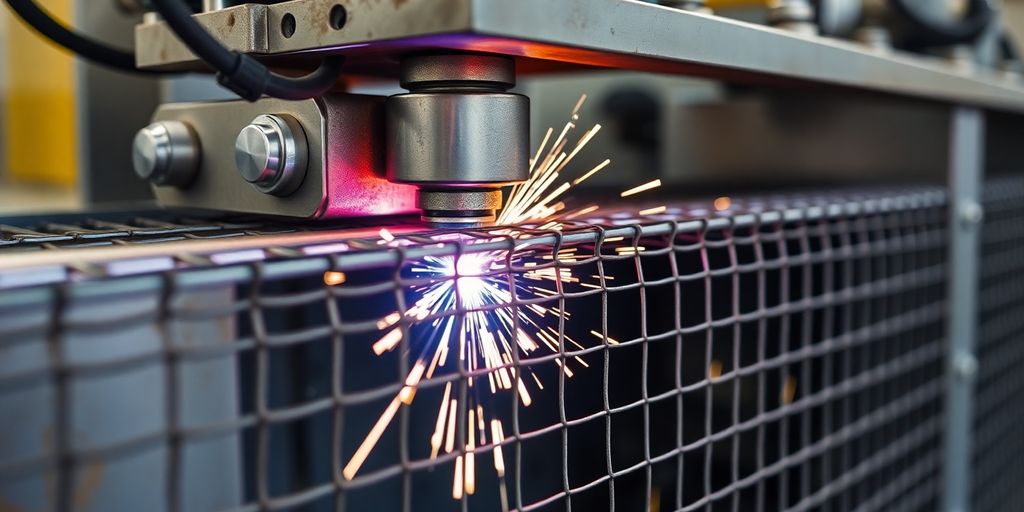
Okay, so when we talk about how fast this welding machine is, we’re really talking about how many welds it can crank out in a minute, or maybe even an hour. It’s not just about speed, though; it’s about getting those welds done right the first time. The welding speed is often measured in meters per minute (m/min) or welds per minute (WPM). A faster machine means more fence mesh done in less time, which is what everyone wants, right? But you also need to think about the wire thickness and the mesh size, because those things can slow it down. Plus, the machine’s design plays a big part. Some machines have multiple welding heads that work at the same time, which can seriously boost the output. Here’s a quick look at some typical speeds:
- Light gauge mesh: Up to 25 m/min
- Medium gauge mesh: Around 15 m/min
- Heavy gauge mesh: Maybe 8 m/min
Material Compatibility
This is where things get interesting. Not all metals are created equal, and not all welding machines can handle every type of wire. The advanced fence mesh welding machine is usually built to work with a range of materials, but you gotta know what it can handle before you start feeding it wire. Typically, these machines are good with:
- Low carbon steel: This is the go-to for most fence applications because it’s cheap and easy to weld.
- Galvanized steel: The zinc coating can make welding a bit trickier, but the machine should be able to handle it with the right settings.
- Stainless steel: Needs more precise control to avoid messing up the corrosion resistance, but a good machine can do it.
- Aluminum alloys: It’s not as common for fence mesh, but some machines can weld aluminum if they’re set up for it.
Power Consumption and Energy Efficiency
Let’s be real, running one of these machines isn’t free. They use a lot of power, and that can add up fast. So, it’s important to look at how energy efficient the machine is. Newer models often have features like automatic shut-off when they’re not in use, or variable frequency drives that let you adjust the power based on what you’re welding. The power consumption is usually measured in kilowatts (kW), and the energy efficiency can be shown as a percentage. A machine with a higher efficiency rating will save you money in the long run, even if it costs a bit more upfront. Here’s a table showing typical power consumption:
| Mesh Type | Power Consumption (kW) |
|---|---|
| Light Gauge | 10-15 |
| Medium Gauge | 15-25 |
| Heavy Gauge | 25-40 |
Operational Benefits of The Advanced Fence Mesh Welding Machine
Increased Production Rates
Okay, so picture this: you’re cranking out fence mesh like it’s nobody’s business. That’s what this machine is all about. The advanced fence mesh welding machine seriously boosts how much you can produce in a day. We’re talking about a significant jump compared to the old ways. It’s faster, more consistent, and doesn’t get tired like human welders do. Think of it as the difference between knitting a scarf by hand and using a knitting machine. The machine just keeps going, turning out product after product. This means you can fulfill bigger orders, take on more clients, and generally make more money. It’s a game-changer for meeting deadlines and keeping customers happy. Plus, less time spent on each project means you can move on to the next one faster, maximizing your overall output.
Enhanced Product Quality
Let’s be real, nobody wants a fence that looks like it was put together by a toddler. This welding machine makes sure that doesn’t happen. It’s all about precision and consistency. Every weld is clean, strong, and exactly where it needs to be. This means fewer defects, less waste, and a final product that looks professional and lasts longer. Think about it: a well-made fence is safer, more secure, and just plain looks better. Customers notice that kind of thing, and it can really set you apart from the competition. Plus, when you’re not constantly fixing mistakes or dealing with returns, you’re saving time and money. It’s a win-win.
Reduction in Labor Costs
Alright, let’s talk money. One of the biggest benefits of this machine is that it cuts down on how much you’re spending on labor. You don’t need as many welders to get the job done, which means lower payroll costs, fewer benefits to pay out, and less time spent managing a large workforce. The machine can handle a lot of the heavy lifting, freeing up your employees to focus on other important tasks, like quality control, customer service, or even just taking a well-deserved break. It’s not about replacing people, it’s about making them more efficient and valuable. Plus, with fewer workers on the floor, you’re also reducing the risk of accidents and injuries, which can save you even more money in the long run.
Customization Options for The Advanced Fence Mesh Welding Machine
Adjustable Mesh Sizes
One of the coolest things about these advanced welding machines is how much control you get over the final product. I mean, think about it: not every fence needs the same size mesh, right? The ability to adjust the mesh sizes on the fly is a total game-changer. You can tweak the settings to produce anything from a super-fine mesh (think chicken wire) to something much larger (like you’d see on a construction site). This isn’t just about convenience; it’s about making sure the fence is exactly what you need for the job. Plus, it cuts down on waste because you’re not stuck with one-size-fits-all materials. It’s all about precision and getting it right the first time.
Programmable Welding Patterns
Okay, so adjustable mesh sizes are great, but what if you need something even more specific? That’s where programmable welding patterns come in. These machines let you set up custom welding patterns, which is way more useful than it sounds. Need a specific area reinforced? No problem, just program it in. Want a decorative pattern for a garden fence? You can do that too. It’s like having a robot artist that can weld. This level of customization means you can create fences that are not only strong and functional but also look pretty darn good. And let’s be honest, nobody wants an ugly fence.
Integration with Automation Systems
Now, if you really want to take things to the next level, you can hook these welding machines up to full-blown automation systems. We’re talking robots loading materials, automated quality control, and the whole shebang. This is where things get seriously efficient. Imagine a factory where the entire fence-making process is automated, from start to finish. Fewer mistakes, faster production, and lower labor costs. It’s a big investment, sure, but the payoff can be huge, especially if you’re churning out fences on a large scale. Plus, it frees up your human workers to focus on other tasks, which is always a good thing.
Maintenance Practices for The Advanced Fence Mesh Welding Machine
Routine Maintenance Procedures
Okay, so you’ve got this fancy fence mesh welding machine, and you want it to, you know, keep working. Makes sense, right? Routine maintenance is where it’s at. Think of it like changing the oil in your car – skip it, and things go south fast. Regular cleaning is super important. We’re talking about getting rid of all the metal bits and gunk that build up during welding. Use a brush, maybe a vacuum, whatever gets the job done. Also, check all the connections – wires, cables, the whole shebang. Make sure nothing’s loose or frayed. And don’t forget to lubricate moving parts. A little grease goes a long way in keeping things running smoothly. Here’s a quick rundown:
- Daily: Clean welding area, check for loose connections.
- Weekly: Lubricate moving parts, inspect wires and cables.
- Monthly: Deep clean, check and adjust settings.
Troubleshooting Common Issues
So, something’s gone wrong. Don’t panic! Most problems are pretty easy to fix if you know what to look for. First off, check the power supply. Is everything plugged in? Is the breaker tripped? Sounds basic, but you’d be surprised how often that’s the issue. If the welding isn’t consistent, it could be a problem with the wire feed. Make sure the wire is feeding smoothly and isn’t tangled. Also, check the welding tips. If they’re worn out or clogged, that can mess things up. And if the machine is making weird noises, that’s usually a sign that something needs lubrication or adjustment. Here’s a simple troubleshooting table:
| Issue | Possible Cause(s) | Solution(s) |
|---|---|---|
| Inconsistent welding | Wire feed problem, worn welding tips | Check wire feed, replace welding tips |
| Machine making noises | Lack of lubrication, loose parts | Lubricate moving parts, tighten loose connections |
| Machine not turning on | Power supply issue, tripped breaker | Check power supply, reset breaker |
Long-term Care and Upkeep
Alright, let’s talk about keeping this machine running for the long haul. It’s not just about the day-to-day stuff; it’s about planning for the future. One big thing is keeping the machine in a clean and dry environment. Moisture and dust are the enemy. Also, make sure you’re using the right settings for the materials you’re welding. Pushing the machine too hard can cause it to wear out faster. And don’t forget about software updates. If your machine has software, keep it updated to get the latest features and bug fixes. Finally, consider getting a professional inspection every year or so. A pro can spot problems you might miss and keep your machine in top shape. Here are some tips for long-term care:
- Keep the machine clean and dry.
- Use the correct settings for materials.
- Update software regularly.
- Get professional inspections.
Safety Features of The Advanced Fence Mesh Welding Machine
Emergency Stop Mechanisms
Okay, so these machines? They’re powerful. That’s why emergency stop buttons are, like, super important. These buttons are strategically placed around the machine so anyone can quickly shut things down if something goes wrong. Think of it as a big, red panic button. When pressed, it immediately cuts off power to all moving parts, preventing further accidents. It’s not just one button either; there are usually several, so no matter where you are near the machine, you can reach one. They’re designed to be easily accessible and highly visible, so there’s no fumbling around in an emergency. Regular checks are a must to make sure they’re working right. You don’t want to find out it’s broken when you actually need it, right?
Protective Shields and Guards
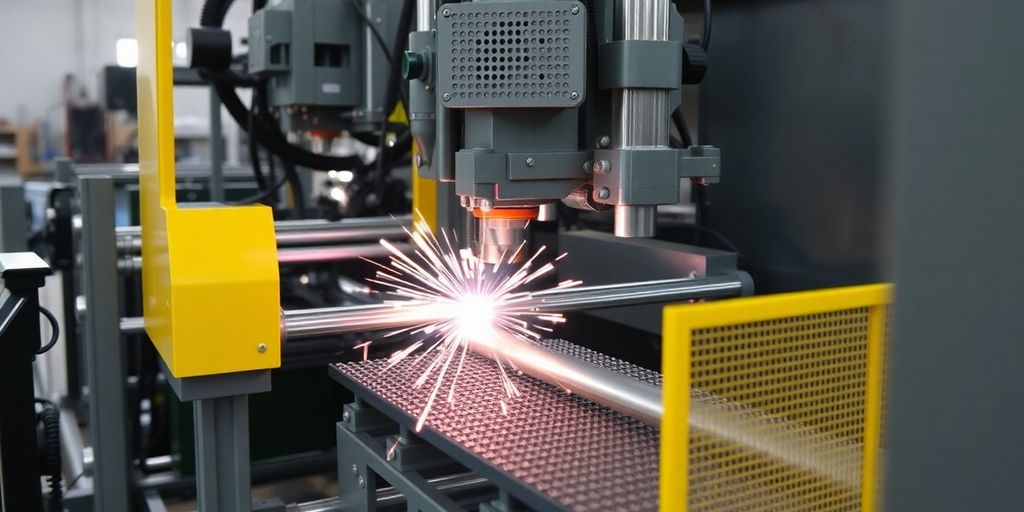
Alright, picture this: sparks flying, metal moving fast – it’s a lot to take in. That’s where protective shields and guards come in. These are physical barriers designed to keep operators safe from things like flying debris, sparks, and accidental contact with moving parts. They’re made from tough materials like polycarbonate or metal mesh, so they can really take a beating. The shields are positioned to give you a clear view of the welding process while still keeping you safe. Plus, there are interlocks that stop the machine if a guard is opened or removed during operation. It’s all about layers of protection, you know? Think of it like wearing a seatbelt and having airbags in your car – you hope you never need them, but they’re there just in case.
Compliance with Industry Standards
So, here’s the deal: these welding machines aren’t just thrown together. They have to meet a bunch of industry standards and regulations to make sure they’re safe to use. This means they’ve been tested and certified by organizations that know their stuff. Compliance with standards like ANSI, OSHA, and CE ensures that the machine meets specific safety requirements for design, construction, and operation. It’s not just about ticking boxes either; it’s about making sure the machine is built with safety in mind from the ground up. Plus, regular audits and inspections help to keep things in check. It’s like having a safety net – you know that the machine has been vetted and approved by experts, so you can have some peace of mind while you’re using it.
Future Trends in Advanced Fence Mesh Welding Technology
Innovations in Welding Techniques
Okay, so what’s next for fence mesh welding? Well, a lot of smart people are working on making the process even better. Think about it: right now, we’re pretty good at welding mesh, but there’s always room to improve. One area is in the actual welding methods. We’re talking about things like using lasers or electron beams to weld the mesh together. These methods could be way faster and more precise than what we use now. Plus, they might let us use different kinds of materials that are hard to weld with current machines. It’s all about making stronger, better fences, faster.
Sustainability in Manufacturing
Everyone’s talking about being green, right? Well, that goes for making fences too. The future is all about making fence mesh in a way that doesn’t hurt the planet as much. This means a few things. First, using materials that are recycled or that don’t take a lot of energy to make. Second, cutting down on waste during the welding process. And third, making machines that use less power. It’s not just about being nice to the environment; it can also save companies money in the long run. Plus, customers are starting to care more about this stuff, so it’s good for business too.
Market Growth and Demand Analysis
So, where’s all this fence mesh going? Everywhere, it seems! The market for fences is growing, and that means more demand for the machines that make them. Think about all the new houses being built, the roads, and the businesses. They all need fences. Plus, there’s a growing need for better security, which means more high-tech fences. All this adds up to a lot of opportunities for companies that make fence mesh welding machines. The trick is to stay ahead of the curve, know what customers want, and be ready to deliver. It’s a good time to be in the fence business, that’s for sure.
Final Thoughts on the Advanced Fence Mesh Welding Machine
In conclusion, the Advanced Fence Mesh Welding Machine stands as a significant advancement in the field of industrial fencing solutions. Its ability to enhance productivity while maintaining high safety standards cannot be overstated. By integrating this machine into your operations, you can expect improved efficiency, reduced labor costs, and a higher quality of output. As industries continue to evolve, adopting such innovative technologies will be crucial for staying competitive. Therefore, investing in the Advanced Fence Mesh Welding Machine is not just a choice; it is a strategic decision that can lead to long-term benefits and success in the industrial sector.


