
Okay, so, rebar mesh welding machines? They’ve come a long way. I remember when everything was manual, and it was a total pain. Now, automation is everywhere. Think about it: machines that can automatically feed the rebar, position it perfectly, and then weld it all together. It’s wild. This shift has seriously cut down on the amount of human labor needed, which not only saves money but also reduces the risk of accidents.
For example, the Fully Automatic Flexible Reinforcement Mesh Welding Production Line by YZ Welding is a game changer. It’s all about making things easier and faster. You can set it up, let it run, and it just spits out perfectly welded mesh. No more spending hours manually aligning and welding each piece. It’s a huge leap forward.
Enhancements in Welding Speed and Efficiency
Speed and efficiency? That’s the name of the game. Old machines were slow, clunky, and prone to errors. Modern machines? They’re like Formula One cars compared to bicycles. They use advanced welding techniques, like resistance welding combined with pneumatic systems, to weld faster and more accurately. This means you can produce way more mesh in the same amount of time. Plus, the welds are stronger and more consistent. It’s a win-win.
Think about construction sites. Time is money, right? If you can get your rebar mesh faster, you can finish projects sooner. And that’s exactly what these machines do. They’re not just faster; they’re also more reliable. Less downtime means more production, and that’s what everyone wants. The impact of mesh welding machines on construction safety is also a big deal. Stronger welds mean safer structures, and that’s something you can’t put a price on.
Innovative Material Handling Techniques
It’s not just about the welding itself; it’s also about how the materials are handled. Modern machines use all sorts of clever tricks to move the rebar around. We’re talking about automated feeding systems, robotic arms, and smart sensors that make sure everything is in the right place at the right time. This reduces waste, minimizes errors, and speeds up the whole process. It’s like watching a well-choreographed dance.
For instance, imagine a machine that can automatically adjust the spacing between the bars based on the project’s specifications. No more manual adjustments or guesswork. The machine does it all for you, ensuring that the mesh is exactly what you need. These advancements in material handling are making rebar mesh welding more efficient and precise than ever before.
Key Features of Modern Rebar Mesh Welding Machines
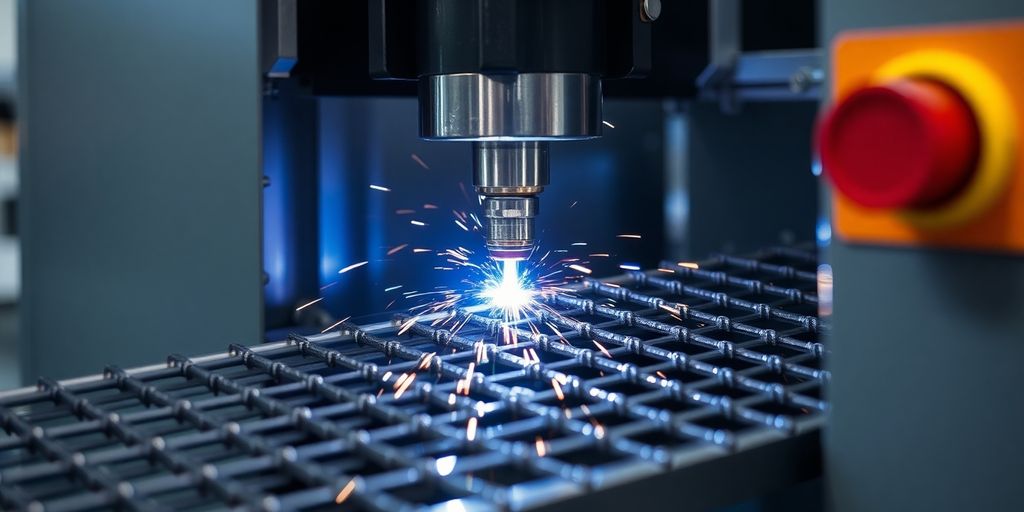
Modern rebar mesh welding machines are a far cry from their predecessors. They’re packed with features designed to boost productivity, improve weld quality, and offer greater flexibility. Let’s take a look at some of the key advancements.
High-Speed Welding Capabilities
One of the biggest improvements in modern machines is their speed. These machines can now weld at rates that were previously unimaginable, significantly reducing production times. This increased speed isn’t just about doing more in less time; it also translates to lower labor costs and faster project completion. The exact speed varies depending on the machine and the type of mesh being produced, but the general trend is towards faster and more efficient welding cycles. For example, some high-end machines can achieve welding speeds of 70-90 rows per minute. This is a game-changer for large-scale construction projects where time is of the essence. You can find wire mesh welding used in many projects.
Adjustable Bar Spacing for Versatility
Another crucial feature is the ability to adjust the spacing between the rebar. This adjustability allows manufacturers to produce a wider range of mesh sizes and configurations, catering to diverse project requirements. Older machines often had fixed spacing, limiting their versatility. Modern machines, however, offer stepless adjustment, giving operators precise control over both longitudinal and horizontal bar spacing. This is particularly important for projects that require custom mesh designs or specific load-bearing capabilities. The flexibility to adjust bar spacing means that one machine can handle multiple jobs, reducing the need for specialized equipment. For example, longitudinal bar spacing can be adjusted to be greater than or equal to 75mm, while horizontal bar spacing can be adjusted to be greater than or equal to 20mm.
Advanced Cross Wire Feeding Mechanisms
The way the cross wires are fed into the machine has also seen significant improvements. Modern machines use advanced feeding mechanisms that ensure accurate and consistent placement of the cross wires, leading to stronger and more uniform welds. These mechanisms often incorporate sensors and automated controls to detect and correct any misalignments, minimizing errors and reducing waste. The result is a higher quality product with fewer defects. These advanced mechanisms also contribute to the overall speed and efficiency of the welding process. If you are looking for a reliable supplier, make sure to check out the different manufacturers.
Impact of Rebar Mesh Welding Machines on Construction Efficiency
Reduction in Labor Costs
Rebar mesh welding machines significantly cut down on the amount of manual labor needed for construction projects. Instead of workers individually placing and welding rebar, these machines automate the process, producing mesh at a much faster rate. This automation means fewer laborers are required on-site, directly translating to lower labor costs. Plus, the precision of the machines reduces material waste, further contributing to cost savings. It’s not just about fewer people; it’s about optimizing the workforce and resources available. For example, consider a project that previously required a team of ten welders; with a rebar solution, that number could potentially be reduced to two or three operators, freeing up the remaining workforce for other tasks.
Improvement in Production Timelines
The speed at which rebar mesh welding machines operate drastically shortens production timelines. Manual rebar placement and welding are time-intensive processes. Machines, on the other hand, can produce large quantities of mesh in a fraction of the time. This accelerated production rate allows construction projects to move forward more quickly, meeting deadlines more efficiently. The impact is felt across the entire project lifecycle, from initial groundwork to final finishing touches. The faster you can get the rebar mesh ready, the sooner you can pour concrete and move on to the next phase. This is especially important for large-scale projects where time is of the essence. The use of construction mesh can lead to a substantial decrease in project duration, offering a competitive advantage.
Enhancement of Structural Integrity
Rebar mesh welding machines ensure consistent and precise welds, which directly enhances the structural integrity of concrete structures. Unlike manual welding, where variations in weld quality can occur, machines produce uniform welds every time. This consistency is crucial for ensuring that the rebar mesh can effectively distribute loads and resist stress. The result is stronger, more durable structures that are less prone to cracking and failure. This improved structural integrity not only increases the lifespan of buildings and infrastructure but also enhances safety. The reliability of machine-welded mesh provides peace of mind, knowing that the structure is built to withstand the test of time. The enhanced weld quality from these machines contributes significantly to the overall structural support of any construction project.
Comparative Analysis of Welding Technologies
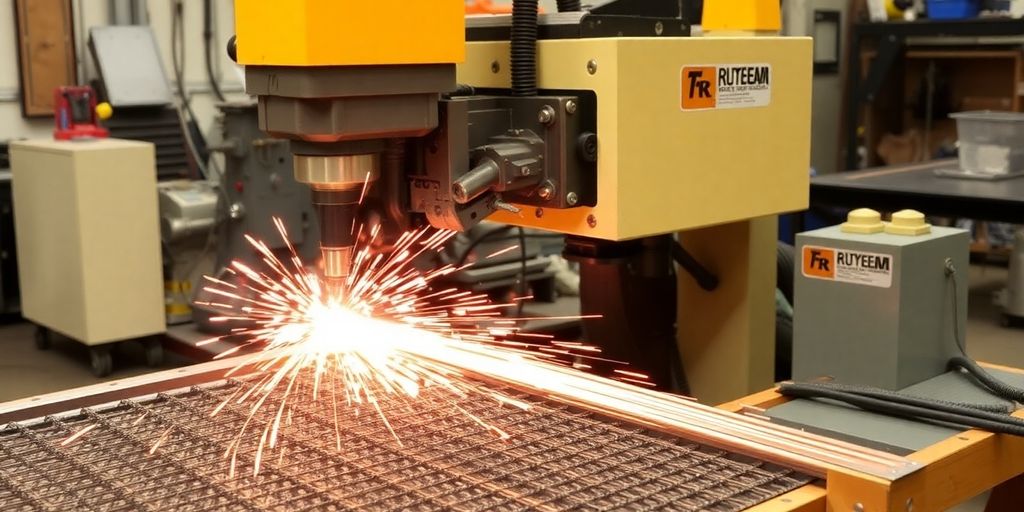
Resistance Welding vs. Pneumatic Welding
Okay, so when it comes to welding rebar mesh, you’ve basically got two main contenders: resistance welding and pneumatic welding. Resistance welding? It’s all about using electricity to heat up the metal until it fuses together. Think of it like a super-powered spot weld. Pneumatic welding, on the other hand, uses compressed air to, well, pneumatically force the materials together while applying heat. It’s a bit more old-school, but still gets the job done. The big difference? Resistance welding is generally faster and more precise, which is why it’s become the go-to for high-volume production. Pneumatic welding can be cheaper to set up initially, but it might not give you the same level of consistency. If you are looking for a spot welding machine, resistance welding is the way to go.
Energy Consumption and Cost Efficiency
Let’s talk about the green stuff – and by that, I mean energy and money. Resistance welding machines can be energy hogs, especially the older models. They need a lot of juice to generate that heat. But, newer machines are getting smarter with energy recovery systems and better insulation, so they’re not quite as bad. Pneumatic welding? It’s a different beast. You’re not using as much electricity directly, but you’re pumping a ton of compressed air, which also takes energy. Plus, you’ve got to factor in the cost of maintaining the air compressors. So, which one is cheaper in the long run? It really depends on how much you’re welding and how efficient your equipment is. You’ve got to crunch the numbers and see what makes sense for your specific operation. Don’t forget to check out welding techniques to improve efficiency.
Quality of Welds and Durability
Alright, so you can weld fast and cheap, but what about the actual weld? Resistance welding usually gives you a really strong, consistent weld. Because you’re controlling the heat and pressure so precisely, you can get a solid bond every time. Pneumatic welding? It can be a bit more hit-or-miss. If the air pressure isn’t just right, or the materials aren’t perfectly aligned, you might end up with a weaker weld. And that’s not good when you’re talking about rebar mesh that’s going into concrete structures. Durability-wise, a good resistance weld should last just as long as the surrounding metal. A bad pneumatic weld? It could be a weak spot that fails over time. So, if you’re prioritizing strength and longevity, resistance welding is probably the safer bet. Consider the construction wire mesh welding machine for durable welds.
Selecting the Optimal Rebar Mesh Welding Machine
Choosing the right rebar mesh welding machine is a big deal. It’s not just about picking any machine; it’s about finding one that fits your specific needs and budget. A well-chosen machine can seriously boost your production and save you money in the long run. But, mess it up, and you could end up with a costly piece of equipment that doesn’t quite do the job.
Assessment of Production Requirements
First off, you gotta figure out what you actually need. What kind of rebar are you working with? What size mesh are you trying to produce? And how much of it? Knowing your production volume is key. Think about the range of rebar diameters your projects typically use. Some machines handle a wider range than others. Also, consider the mesh size. Can the machine adjust to different spacing requirements, or is it limited to a specific size? The purpose of the mesh matters too. Is it for standard concrete reinforcement, or does it need to meet specific industry standards? All these factors will narrow down your options.
Evaluation of Technical Specifications
Next, let’s get technical. Look at the machine’s specs. What’s its welding speed? How precise is it? What kind of power does it need? Does it have automated mesh welding capabilities? These details can make or break your operation. Welding speed is a big one. A faster machine means more output, but not if it sacrifices quality. Precision is also important. You want consistent welds that meet your standards. Power consumption affects your operating costs, so look for an energy-efficient model. Automation can reduce labor costs and improve consistency, but it might also mean a higher initial investment. It’s a balancing act.
Consideration of After-Sales Support
Don’t forget about what happens after you buy the machine. What kind of support does the manufacturer offer? Do they provide training? What about maintenance and repairs? A good warranty and reliable after-sales service can save you a lot of headaches down the road. Find out if the manufacturer offers on-site training for your operators. Proper training can prevent accidents and ensure your team knows how to get the most out of the machine. Also, check the availability of spare parts. Can you get them quickly, or will you be stuck waiting for weeks if something breaks down? These things matter when you’re trying to keep your production line running smoothly.
Future Trends in Rebar Mesh Welding Technology
Emerging Innovations in Machine Design
Okay, so, like, what’s next for rebar mesh welding machines? It’s all about making them smarter and more adaptable. We’re talking about designs that can handle different rebar sizes and mesh patterns without needing a ton of manual adjustments. Think modular systems where you can swap out parts to fit the job. This flexibility is key for construction sites that need to switch between projects quickly. Plus, there’s a big push for making these machines more compact and easier to move around, especially on crowded sites. It’s not just about welding; it’s about making the whole process smoother.
Sustainability and Energy Efficiency
Everyone’s talking about going green, right? Well, rebar mesh welding is no exception. The future is all about cutting down on energy use and waste. We’re seeing more machines that use less power and recycle materials. For example, some new models use advanced power management systems to reduce energy consumption during idle times. Also, there’s a focus on using more sustainable materials in the machine construction itself. It’s not just good for the planet; it also helps companies save money on energy bills and sustainable manufacturing.
The Role of Artificial Intelligence in Welding
AI is making its way into everything, and welding is no different. Imagine machines that can automatically adjust welding parameters based on the type of rebar and the environmental conditions. That’s what’s coming. AI can also help with quality control by detecting defects in real-time and making corrections on the fly. Plus, it can predict when a machine needs maintenance, reducing downtime and keeping things running smoothly. It’s like having a mesh welding machine that’s constantly learning and improving. Pretty cool, huh?
Challenges in Implementing Rebar Mesh Welding Solutions
Technical Limitations and Machine Downtime
Okay, so you’re thinking about getting a rebar mesh welding machine? Cool! But let’s be real, it’s not all sunshine and rainbows. These machines, while awesome, can be a bit temperamental. One of the biggest headaches is definitely the technical limitations and the dreaded downtime. You might run into issues with the machine not handling certain sizes of rebar, or the welding process just not being consistent. And when these machines break down – and trust me, they will – you’re looking at lost production time, which translates directly into lost money. Getting parts can sometimes be a pain, and finding someone who actually knows how to fix these things? Good luck with that. It’s something you really need to consider before jumping in.
Training and Skill Development for Operators
Another thing that often gets overlooked is the training aspect. You can’t just plop someone in front of a wire mesh welding machine and expect them to become an instant expert. These machines are complex, and operating them safely and efficiently requires some serious skill. You’ll need to invest in proper training programs, which can be costly and time-consuming. Plus, there’s always a learning curve involved, so expect some initial hiccups and mistakes along the way. Finding people who are willing to learn and adapt to this technology can also be a challenge, especially in areas where skilled labor is already scarce. It’s not as simple as just pushing a button; there’s a real art to it.
Market Competition and Cost Management
Finally, let’s talk about the bottom line. The market for rebar mesh is competitive, and you’re going to be up against companies that are already well-established. Investing in a reinforcement mesh welding line is a significant expense, and you need to make sure you can actually make a return on that investment. This means carefully managing your costs, from raw materials to labor to energy consumption. You’ll also need to be smart about pricing your products to stay competitive while still making a profit. It’s a delicate balancing act, and it requires a solid business plan and a keen understanding of the market. Don’t just assume that buying a fancy machine will automatically make you successful; you need to have a strategy in place to make it all work.
Final Thoughts on Rebar Mesh Welding Machine Technology
In conclusion, the advancements in rebar mesh welding machine technology present significant opportunities for enhancing productivity and efficiency in the construction sector. These machines, with their high welding speeds and adjustable parameters, allow for the rapid production of high-quality welded mesh, which is essential for modern construction projects. By adopting these innovative solutions, businesses can not only streamline their operations but also achieve substantial cost savings over time. Furthermore, the importance of reliable after-sales support cannot be overstated, as it ensures that these machines operate at optimal levels, minimizing downtime and maximizing output. As the industry continues to evolve, embracing such technology will be crucial for maintaining competitiveness and meeting the growing demands for efficiency and quality in construction.


