
Key Components of Electric Welded Mesh Machines
Wire Feeding Mechanism
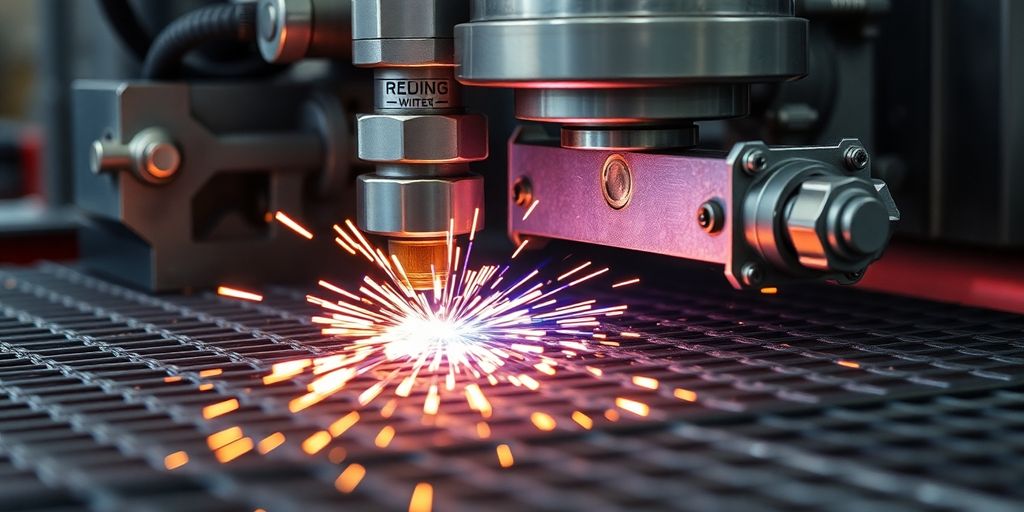
So, these electric welded mesh machines? They’re not just simple welders; they’re complex systems with a bunch of different parts working together. First up, you’ve got the wire feeding mechanism. Think of it as the machine’s way of grabbing the wires from spools and getting them exactly where they need to be. It’s all about precision here. If the wires aren’t perfectly aligned, the whole mesh is gonna be off. The wire feeding system pulls the wires from spools and positions them correctly. It’s a crucial part of making sure the mesh is uniform and strong. It’s like the foundation of the whole operation, making sure everything else can do its job right.
Welding Head Functionality
Next, there’s the welding head. This is where the magic happens. The welding head is what actually fuses the wires together. Usually, it uses something called resistance welding. That’s where an electric current is passed through the wires to fuse them together. It’s like a super-fast, super-efficient way to join metal. The welding head has to be precise, too. It needs to apply the right amount of current and pressure to make sure the weld is strong and consistent. If the weld is too weak, the mesh will fall apart. If it’s too strong, it could damage the wires. It’s a delicate balance, but the welding head is up to the task. You can use a construction mesh welding machine for similar tasks.
Control Systems and Automation
And last but not least, there are the control systems. These are super important. They’re like the brains of the whole operation. The control systems manage the timing, current, and pressure to make sure each weld is perfect. They also handle things like the speed of the machine and the overall pattern of the mesh. Without the control systems, the machine would just be a bunch of parts. They’re what make it all work together seamlessly. Newer models are using more advanced sensors and controls to boost efficiency and quality. Automated mesh welding enhances productivity in manufacturing.
Technological Innovations in Electric Welded Mesh Production
Automation and Robotics in Welding
Automation and robotics are really shaking things up in electric welded mesh production. Instead of relying on manual labor, robots are now handling the welding process. This leads to faster production times and fewer errors. Automated systems can operate continuously, significantly boosting output. Plus, they can perform welds in tricky or dangerous spots, keeping human workers safe. Imagine robots precisely placing each weld, following programmed patterns without breaks – it’s a huge leap from manual labor. This also allows for better geomembrane welding in complex projects.
Advanced Control Systems
Advanced control systems are essential for modern mesh welding machines. These systems allow operators to fine-tune the welding process for optimal results. They manage everything from the timing and current to the pressure applied during welding. This level of control ensures consistent weld quality and reduces the risk of defects. Plus, these systems often come with user-friendly interfaces, making it easier for operators to monitor and adjust the settings as needed. Think of it as having a smart brain that optimizes every weld, ensuring top-notch quality and efficiency. It’s a game-changer for China’s steel cage production.
Integration of Sensors for Quality Assurance
Integrating sensors into electric welded mesh machines is a big step forward in quality control. These sensors monitor various parameters during the welding process, such as temperature, current, and pressure. If any of these parameters fall outside the acceptable range, the system can automatically adjust the settings or even stop the machine to prevent defects. This real-time monitoring ensures that every weld meets the required standards, reducing the need for manual inspection and minimizing material waste. It’s like having a vigilant quality control inspector built right into the machine, ensuring that every piece of mesh is up to par. This is all about efficiency and precision.
Comparative Analysis of Electric Welded Mesh Machines and Traditional Methods
Speed and Efficiency
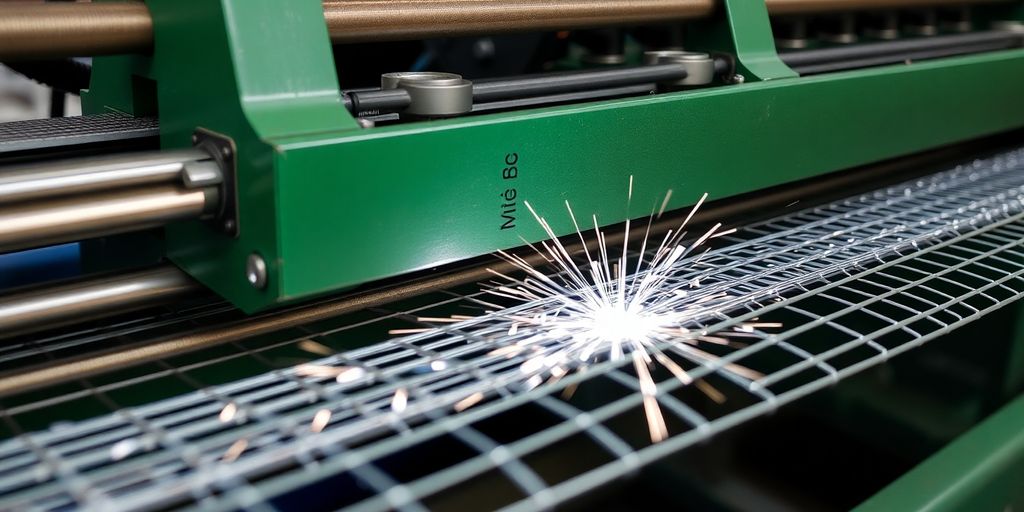
Electric welded mesh machines offer a significant advantage in speed and efficiency compared to traditional welding methods. Traditional methods, often involving manual labor, are inherently slower and more labor-intensive. Electric welded mesh machines automate the process, drastically increasing the production rate. This automation not only reduces the time required to produce a given quantity of mesh but also minimizes the need for extensive manual intervention. For instance, a machine can produce several meters of mesh per minute, a feat unattainable through manual welding. This speed translates directly into increased output and reduced project timelines.
Consistency and Quality
One of the most compelling advantages of electric welded mesh machines is the consistency and quality of the welds they produce. Traditional welding methods are subject to human error, leading to variations in weld strength and appearance. Electric machines, on the other hand, are programmed to execute each weld with precision, ensuring uniformity across the entire mesh. This consistency is crucial in applications where structural integrity is paramount. The use of advanced control systems in these machines allows for precise regulation of welding parameters, such as current and pressure, further enhancing the quality and reliability of the welds. This results in a more durable and dependable product compared to manually welded mesh. You can find reliable equipment in the welding industry.
Cost Implications
While the initial investment in an electric welded mesh machine may be higher than that of traditional welding equipment, the long-term cost implications often favor the automated approach. Traditional welding involves significant labor costs, including wages, benefits, and training. Electric machines reduce these costs by minimizing the need for manual labor. Additionally, the increased efficiency and reduced material waste associated with automated welding contribute to further cost savings. The consistency of the welds also reduces the likelihood of defects and rework, minimizing material waste and additional labor expenses. Over time, these factors can result in a lower total cost of ownership compared to traditional welding methods. Here’s a quick comparison:
| Feature | Traditional Welding | Mesh Welding Machine |
|---|---|---|
| Speed | Slow | Fast |
| Consistency | Variable | High |
| Labor Costs | High | Low |
| Material Waste | More | Less |
| Initial Investment | Low | High |
For similar tasks, consider a geomembrane welding machine.
Advantages of Electric Welded Mesh Machines in Manufacturing
Increased Production Rates
Okay, so picture this: you’re trying to get a big project done, and you need a ton of welded wire mesh. Doing it the old way, by hand, takes forever. Seriously, it’s like watching paint dry. But then, BAM! You bring in an electric welded mesh machine. Suddenly, things are moving at warp speed. These machines can crank out welded mesh way faster than any human can, which means your project gets done quicker.
Think about it: less time spent welding means less time spent on the whole project. That’s less money on labor, less money on equipment rentals, and fewer headaches overall. Plus, you can take on more projects because you’re not stuck waiting for the welding to finish. It’s a total game-changer. Automated mesh welding really enhances productivity in manufacturing.
Reduction of Material Waste
One of the cool things about using electric welded mesh machines is that they’re way better at reducing waste. When you’re welding by hand, it’s easy to mess up and end up with a bunch of scrap material. But with these machines, everything is super precise, so you’re not wasting a bunch of wire. Plus, because the welds are so consistent, you don’t have to throw away as much stuff because of defects. It’s all about being efficient and not wasting resources. Here’s a quick comparison of material waste:
| Feature | Traditional Welding | Mesh Welding Machine |
|---|---|---|
| Material Waste | More | Less |
Enhanced Safety in Operations
Safety is a big deal when you’re working with heavy machinery and welding equipment. Electric welded mesh machines are designed with safety in mind, so they’re way safer than doing things by hand. For one thing, a lot of the process is automated, so workers don’t have to get as close to the welding action. Plus, these machines usually have safety features like emergency shut-off switches and protective barriers to prevent accidents. It’s all about keeping everyone safe and sound while they’re getting the job done. Automated systems can work continuously, leading to higher output. Plus, they can perform welds in difficult or dangerous spots, keeping workers safe. Think about it: robots precisely placing each weld, following programmed patterns without breaks. It’s a big step up from someone doing it by hand all day. This also allows for better geomembrane welding in complex projects.
Applications of Electric Welded Mesh Machines in Various Industries
Construction and Infrastructure
Electric welded mesh machines are super important in construction. Think about reinforced concrete structures. These machines can quickly produce welded wire mesh, which gives concrete its strength. Instead of tying individual steel bars together, you just drop in the mesh. It’s way quicker and makes sure everything is spaced out evenly, which is key for strong buildings and bridges. Plus, because the machines are so precise, you get fewer mistakes and less waste. It’s a win-win for efficiency and quality in construction. Using a construction mesh welding machine ensures welds are up to the task.
Agricultural Fencing Solutions
In agriculture, fencing is essential for keeping livestock safe and protecting crops. Electric welded mesh machines produce fencing that is strong and durable. This fencing can withstand weather and keep animals contained. Farmers can use these machines to create custom fencing solutions that meet their specific needs. This includes different mesh sizes and heights, providing flexibility for various applications. The consistency of the welds ensures the fence will hold up for years, reducing the need for frequent repairs or replacements. It’s a practical and cost-effective solution for agricultural fencing needs.
Industrial Applications
Beyond construction and agriculture, electric welded mesh machines find applications in various industrial settings. They are used to manufacture wire mesh welding machine for machine guards, storage solutions, and material handling equipment. The precision and speed of these machines allow for the efficient production of custom mesh products tailored to specific industrial requirements. For example, in the automotive industry, welded mesh is used in the production of filters and safety barriers. In the mining industry, it’s used for screening and separation processes. The versatility of electric welded mesh machines makes them a valuable asset in diverse industrial applications.
Challenges and Solutions in Electric Welded Mesh Production
Common Production Issues
Okay, so let’s talk about the real deal – what actually goes wrong when you’re trying to churn out welded mesh with these machines? It’s not always smooth sailing, trust me. One of the big headaches is inconsistent welding. You know, where some spots are strong, and others are just…meh. This can happen because of fluctuations in the power supply, or maybe the wire isn’t feeding properly. Then there’s the issue of mesh distortion. Imagine spending all that time welding, only to find out the mesh is all warped and wonky. That’s usually down to uneven tension during the welding process. And don’t even get me started on wire breakage. Snapping wires can bring the whole operation to a screeching halt, and it’s often caused by poor quality wire or misaligned feeding mechanisms. These problems can really mess with your production schedule and drive up costs. In traditional welded mesh production, issues like uneven mesh surfaces, misaligned edges, and unstable welding quality often arise. These problems lead to increased maintenance and inefficiency, making production less competitive. The automatic mesh welding production line can help.
Technological Solutions
Alright, so we know the problems. What’s the fix? Well, thankfully, there are some pretty cool technological solutions out there. For starters, advanced control systems are a game-changer. These systems constantly monitor the welding process and make real-time adjustments to voltage, current, and pressure. This helps ensure consistent weld quality, no matter what. Then there’s the whole area of improved wire feeding mechanisms. We’re talking about systems that use sensors and servo motors to precisely control the wire feed, minimizing the risk of breakage and distortion. And let’s not forget about better cooling systems. Overheating can cause all sorts of problems, so having a robust cooling system can keep the machine running smoothly, even during long production runs. DAPU’s new electric welded mesh machine introduces a trolley mesh-pulling system, offering advanced solutions for consistent and high-quality mesh production. The mesh welding machines enhance efficiency and reduce waste.
Future Trends in Mesh Production
So, what’s next for electric welded mesh production? Well, I think we’re going to see even more automation and integration of AI. Imagine machines that can automatically detect and correct defects in real-time, or even optimize the welding process based on historical data. That’s the kind of stuff that’s on the horizon. We’re also likely to see more focus on sustainability. That means using more energy-efficient welding techniques and reducing material waste. And, of course, there will be continued advancements in materials science, leading to stronger, lighter, and more corrosion-resistant wire meshes. It’s a pretty exciting time to be in this industry, and I can’t wait to see what the future holds. The trolley system applies even tension during mesh pulling, ensuring a smooth and level surface. This eliminates common issues of warping or irregularities seen with glue reel machines. With the trolley mechanism, the mesh edges are perfectly aligned. This feature guarantees clean and uniform edges, enhancing the overall appearance and quality of the finished product. The Delta PLC and servo motor provide precise control, making it easy to adjust wire spacings and mesh dimensions directly on the touch screen. This flexibility allows manufacturers to switch between production specifications quickly and efficiently. Equipped with water-cooled welding transformers and independent control technology, the machine ensures consistent geomembrane welding.
User Experience and Operational Efficiency of Electric Welded Mesh Machines
Ease of Use and Maintenance
Okay, so let’s talk about how easy these electric welded mesh machines are to use and keep running. Honestly, some machines can be a bit intimidating at first glance, but most modern models are designed with the user in mind. The interfaces are usually pretty straightforward, with clear controls and digital displays that show you exactly what’s going on. You can usually adjust settings like welding speed, wire spacing, and current intensity without too much hassle.
Maintenance is another big thing. No one wants a machine that’s constantly breaking down. Luckily, most electric welded mesh machines are built to be pretty durable. Regular maintenance usually involves things like cleaning the welding heads, checking the wire feeding mechanisms, and making sure all the electrical connections are tight. Some machines even have built-in diagnostic systems that can alert you to potential problems before they become major issues. Keeping up with maintenance is key to automated mesh welding and extending the life of your equipment.
Training Requirements for Operators
So, you’ve got this fancy new electric welded mesh machine, but who’s going to run it? Well, that’s where training comes in. The amount of training needed really depends on the complexity of the machine and the experience of the operator. For simpler models, a few days of training might be enough to get someone up to speed. But for more advanced machines with lots of bells and whistles, you might need a more extensive training program.
Training usually covers things like machine setup, operation, troubleshooting, and safety procedures. It’s important for operators to understand how all the different components work together and how to adjust settings to achieve the desired mesh quality. Also, safety is a big deal. Operators need to know how to operate the machine safely and what to do in case of an emergency. Proper training not only ensures that the machine is operated efficiently but also minimizes the risk of accidents and injuries. Plus, well-trained operators are better equipped to lower labor costs and identify potential problems before they cause downtime.
Impact on Workforce Dynamics
Electric welded mesh machines can really shake things up when it comes to your workforce. On one hand, they can automate a lot of the repetitive tasks that used to be done by hand, which means you might not need as many manual laborers. This can lead to some tough decisions about staffing levels. On the other hand, these machines also create new opportunities for skilled workers who can operate, maintain, and troubleshoot them.
The key is to invest in training and development so that your existing workforce can adapt to the new technology. This might involve retraining manual laborers to become machine operators or hiring technicians with expertise in automation and robotics. It’s also important to think about how the introduction of these machines will affect the overall work environment. You might need to adjust job descriptions, create new team structures, or implement new communication protocols to ensure that everyone is on the same page. Change can be tough, but with careful planning and communication, you can minimize disruption and maximize the benefits of automation.
Final Thoughts on Electric Welded Mesh Machines
In summary, the advent of electric welded mesh machines marks a significant advancement in the manufacturing sector, particularly in wire mesh production. These machines not only enhance speed and efficiency but also ensure a level of precision that manual methods cannot match. By automating the welding process, manufacturers can achieve consistent quality while reducing labor costs and material waste. As technology continues to evolve, the integration of features such as advanced control systems and automated processes will further optimize production capabilities. Ultimately, the electric welded mesh machine stands as a testament to the ongoing transformation of manufacturing practices, paving the way for a more efficient and precise future.


