
It’s easy to get caught up in the myths surrounding polyurethane and its role in fire incidents. The truth is a bit more nuanced than simple headlines might suggest. Polyurethane is a widely used material, and understanding how it behaves in a fire is important for safety and informed decision-making in construction and other applications. Let’s take a closer look at some key aspects of polyurethane’s involvement in fire propagation.
Dispelling Misconceptions Regarding Polyurethane Flammability
One of the biggest misconceptions is that polyurethane is inherently a highly dangerous and flammable material. While it’s true that polyurethane can burn, it’s not always the accelerant that some might believe. The flammability of polyurethane depends heavily on its composition, density, and whether it has been treated with flame retardants. Many polyurethanes used in construction are specifically designed to meet fire safety standards. It’s also important to remember that polyurethane is often used within polyurethane sandwich panels, where external layers provide a degree of fire protection.
The Grenfell Tower Incident and Media Speculation
The Grenfell Tower fire understandably raised serious questions about the safety of building materials, including polyurethane. The media coverage often focused on the potential role of insulation materials in the rapid spread of the fire. However, it’s important to avoid generalizations and to consider the specific circumstances of the incident. Factors such as the type of cladding used, the presence or absence of firebreaks, and the overall building design all played a role. Attributing the fire solely to polyurethane is an oversimplification. It is important to consider that the PU production line is only the first step, and the final product’s fire resistance depends on many other factors.
Factors Influencing Fire Spread in Building Structures
Many things can affect how quickly a fire spreads in a building. These include:
- Building Design: The layout of a building, including the presence of firewalls, fire doors, and adequate escape routes, significantly impacts fire containment and evacuation.
- Ventilation: The amount of oxygen available to a fire can dramatically increase its intensity and spread. Poorly ventilated spaces can lead to a build-up of flammable gases, while excessive ventilation can fuel the flames.
- Construction Materials: The type of materials used in the building’s construction, including insulation, cladding, and structural components, plays a crucial role in fire resistance. Materials with low fire resistance can contribute to rapid fire spread.
It’s also important to note that even if the polyurethane catches fire, it has self-extinguishing properties. Unlike some other materials, polyurethane doesn’t drip or melt when it burns, which helps prevent the fire from spreading. The surface of the polyurethane will start to carbonize, which protects the core and slows down the spread of the fire.
Regulatory Compliance and Fire Resistance of Polyurethane
European Standards for Fire Testing and Classification
When it comes to polyurethane in construction, there are strict rules in place, especially in Europe. These regulations make sure the polyurethane used meets certain fire safety standards. It’s not just about saying something is fire-resistant; it has to pass specific tests and get classified accordingly. These classifications, often called Euroclasses, determine how a material reacts to fire, including its flammability and how it contributes to fire spread. Polyurethane itself isn’t usually exposed; it’s inside more resistant materials. The fire resistance is really about how well the outer layers protect the polyurethane.
Impact of Flame Retardants on Polyurethane Performance
To make polyurethane safer, manufacturers add flame retardants. These chemicals are designed to slow down ignition and reduce the spread of flames. Think of them as a safety buffer, giving people extra time to escape in case of a fire. The type and amount of flame retardant used can significantly change how the polyurethane behaves in a fire. However, it’s a balancing act. Some studies suggest that certain flame retardants, when burned, can produce toxic byproducts. So, it’s important to choose flame retardants that are effective but also minimize potential health risks. The goal is to improve fire resistance without making things worse in other ways. For example, PU sandwich panels are increasingly popular because of their fire-resistant properties.
Influence of Polyisocyanurate Content on Fire Rating
Polyisocyanurate (PIR) is like polyurethane’s tougher cousin. When you increase the amount of PIR in the formula, you generally get a better fire rating. PIR forms a char layer on the surface when exposed to heat. This char acts as insulation, protecting the material underneath and slowing down the fire. So, a higher PIR content often means the material can withstand higher temperatures for a longer time. This is why PIR is often preferred in applications where fire safety is a major concern. It’s all about tweaking the formula to get the best possible fire performance. The more resistant the outer layer, the lower the risk of the polyurethane catching fire.
Material Composition and Fire Behavior of Polyurethane Panels
Protective External Layers in Polyurethane Sandwich Panels
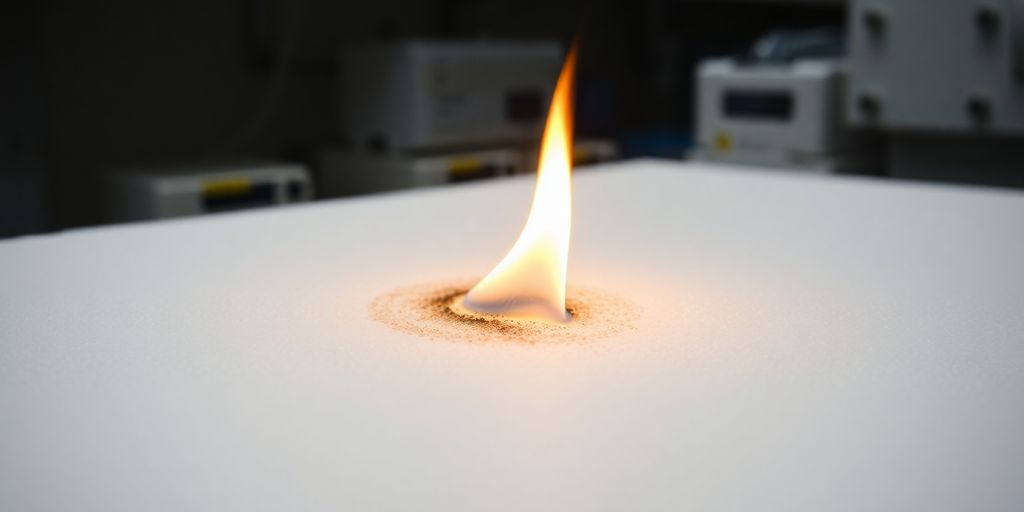
Polyurethane (PU) sandwich panels don’t just consist of the polyurethane core. They have external layers that play a big role in how the panel behaves in a fire. These layers are the first line of defense against flames and heat. Typically, these external layers are made of materials like steel, aluminum, or even fiber cement. The type of material and its thickness directly affect how long the panel can resist fire before the polyurethane core is exposed. For example, a thicker steel layer will provide more protection than a thin aluminum layer. The way these layers are joined together also matters. If there are gaps or weak points, fire can spread more easily. It’s important to consider the fire resistance of the entire panel assembly, not just the polyurethane core.
Self-Extinguishing Properties of Polyurethane Upon Ignition
Okay, so polyurethane is flammable, but here’s a thing: it has some self-extinguishing properties. When polyurethane catches fire, it forms a layer of char on its surface. This char layer acts like insulation, slowing down the burning process and preventing the fire from spreading quickly into the core of the material. It’s not like it magically puts the fire out, but it does buy some time. This is different from materials like polystyrene, which can melt and drip, spreading the fire further. The self-extinguishing behavior depends on the specific formulation of the polyurethane, including the use of flame retardants. Without flame retardants, the self-extinguishing properties are less effective. Also, good ventilation can affect the yield of carbon monoxide and hydrogen cyanide.
Comparison with Other Insulating Materials Under Fire Conditions
When it comes to fire, not all insulation is created equal. Polyurethane is just one option, and it’s important to see how it stacks up against other common materials like mineral wool, fiberglass, and polystyrene. Mineral wool and fiberglass are generally non-combustible, meaning they won’t catch fire. They can even act as fire stops, slowing down the spread of flames. Polystyrene, on the other hand, is highly flammable and can melt and drip, making a fire worse. Polyurethane falls somewhere in the middle. It’s combustible, but it has those self-extinguishing properties we talked about. The table below summarizes the combustibility of common insulation materials:
| Material | Combustibility | Additional Notes |
|---|---|---|
| Mineral Wool | Non-Combustible | Can act as a fire stop. |
| Fiberglass | Non-Combustible | Less fire-resistant than mineral wool. |
| Polyurethane | Combustible | Forms char layer; self-extinguishing properties. |
| Polystyrene | Combustible | Melts and drips; spreads fire. |
Ultimately, the best choice depends on the specific application and the overall fire safety strategy for the building. If you’re looking for PU sandwich panel machine line, make sure to consider the fire safety aspects.
Combustion Byproducts and Toxicity of Polyurethane
Formation of Carbon Monoxide and Hydrogen Cyanide During Pyrolysis
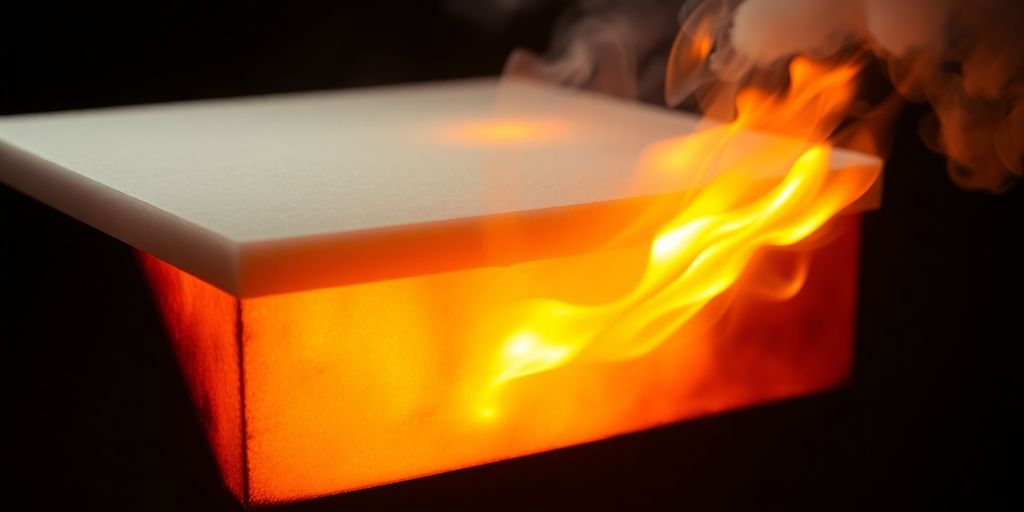
When polyurethane sandwich panels burn, they don’t just disappear in a puff of smoke. The process, called pyrolysis, breaks down the material into a bunch of different gases and particles. Two of the most concerning gases are carbon monoxide (CO) and hydrogen cyanide (HCN). These are major asphyxiants, meaning they can stop your body from getting the oxygen it needs. CO is produced when there isn’t enough oxygen for complete combustion, and HCN comes from the nitrogen in the polyurethane structure. The amount of each gas produced depends on things like temperature, how much oxygen is available, and even the specific type of polyurethane being burned.
Influence of Ventilation Conditions on Toxicant Yields
How much fresh air is getting to a fire involving polyurethane makes a huge difference in the kinds and amounts of toxic gases produced. In a well-ventilated fire, where there’s plenty of oxygen, you’ll still get CO and HCN, but the relative amounts can shift. If it’s a smoldering fire in a closed room, the lack of oxygen means you’ll get a lot more CO. HCN yields reported in under-ventilated conditions vary depending on the composition of the material; with flexible foams producing less than rigid foams and polyisocyanurates producing the most overall. Also, the temperature of the fire plays a role; higher temperatures generally mean more HCN is released because the nitrogen-containing parts of the polyurethane break down more readily. Ventilation conditions have a critical effect on the yield of the two major asphyxiants, carbon monoxide and hydrogen cyanide.
Impact of Fire Retardants on Combustion Toxicity
Do fire retardants make things better or worse when polyurethane burns? It’s a complicated question. The overall toxicity of polyurethane materials followed a similar trend to their HCN yields; with flexible foams generally being the least toxic, rigid foams being slightly more toxic and polyisocyanurate foams being the most toxic. Some studies suggest that certain fire retardants can actually increase the amount of CO produced, especially in well-ventilated fires, because they interfere with the process of CO turning into carbon dioxide (CO2). Other studies show that fire retardants don’t really change the overall toxicity that much. The truth is, it depends on the specific fire retardant being used. Because there are so many different kinds of fire retardants, it’s hard to make a blanket statement about their impact on combustion toxicity. Fire retardants, such as gas-phase free radical quenchers, have been reported to increase the yields of CO in well-ventilated conditions by preventing the oxidation of CO to CO2.
Mitigation Strategies for Fire Risk in Polyurethane Applications
Architectural Design for Fire Containment and Evacuation
When we’re talking about keeping people safe from fires, the way buildings are designed is super important. It’s not just about slapping up walls and calling it a day. We need to think about how a fire might start and spread, and then design the building to slow it down and give people a chance to get out safely. This means things like fire-resistant walls and doors to create compartments that can contain a fire for a certain amount of time. Also, having multiple, clearly marked evacuation routes is a must. Think about it: wide stairwells, well-lit hallways, and emergency exits that are easy to find, even when visibility is poor. And don’t forget about people with disabilities – we need to make sure they can evacuate safely too. Building codes usually have a lot to say about this, but it’s always a good idea to go above and beyond to make sure everyone is protected.
Importance of Fire-Resistant Cladding Materials
The outside layer of a building, what we call cladding, plays a huge role in how a fire behaves. If you use materials that catch fire easily, you’re basically giving the flames a free pass to spread. But if you use fire-resistant cladding, you can slow things down a lot. Think of it like a shield that protects the building’s insides. Materials like PU sandwich panels with a good fire rating can buy valuable time for people to escape and for firefighters to do their job. Plus, fire-resistant cladding can help prevent the fire from spreading to nearby buildings. It’s all about containing the fire where it starts and stopping it from becoming a bigger disaster. The type of cladding used directly impacts the fire resistance of the building.
Role of Sprinkler Systems in Fire Suppression
Sprinkler systems are like having a team of firefighters on standby, ready to jump into action the moment a fire starts. These systems are designed to detect heat and automatically spray water on the flames, often putting out the fire before it has a chance to spread. Sprinklers are especially useful in buildings with lots of polyurethane, as they can quickly cool down the material and prevent it from releasing toxic fumes. But it’s not just about having sprinklers; they need to be properly designed, installed, and maintained to work effectively. This means regular inspections, testing, and making sure the water supply is reliable. When you consider the potential damage and loss of life that a fire can cause, sprinkler systems are a pretty smart investment. They can significantly reduce the risk and give everyone inside a much better chance of survival. Here’s a quick look at how sprinklers can help:
- Early fire suppression
- Reduced fire spread
- Lower toxic fume release
Assessment Methodologies for Polyurethane Fire Performance
Bench-Scale Testing for Material Flammability
When it comes to figuring out how well polyurethane performs in a fire, we often start small. Bench-scale testing is where it’s at. Think of it as the initial screening process. These tests are designed to quickly and cheaply assess how easily a material ignites, how fast flames spread across its surface, and how much heat it releases when burning. One common method is the cone calorimeter test. It basically blasts a small sample of the material with a specific amount of heat and measures things like time to ignition, heat release rate, and total heat released. Another test involves exposing the material to a flame and observing how it behaves. Does it melt? Does it drip? Does it self-extinguish? These observations are key. These tests are super helpful for comparing different formulations of polyurethane or for checking if a particular material meets certain fire safety standards. However, it’s important to remember that these tests are conducted under controlled conditions and might not perfectly reflect how the material would behave in a real-world fire scenario. They’re a good starting point, but not the whole story.
Large-Scale Enclosure Fire Data Analysis
Okay, so bench-scale tests give us some initial insights, but to really understand how polyurethane behaves in a fire, we need to go big. That’s where large-scale enclosure fire tests come in. These tests involve setting up a room or a compartment that’s representative of a real building and then igniting a fire inside. The goal is to see how the fire spreads, how much smoke is produced, and how the polyurethane panels contribute to the overall fire behavior. Sensors are placed throughout the enclosure to measure temperature, heat flux, gas concentrations, and other important parameters. The data collected from these tests can be used to validate computer models of fire behavior and to assess the effectiveness of different fire safety measures, like sprinkler systems or fire-resistant cladding. These tests are expensive and time-consuming, but they provide invaluable information about the real-world fire performance of polyurethane. Plus, they help us understand how different factors, like ventilation and the presence of other combustible materials, can influence the outcome of a fire.
Correlation Between Laboratory and Real-World Fire Scenarios
So, we’ve got bench-scale tests and large-scale tests. The big question is: how well do these tests predict what will actually happen in a real fire? That’s where correlation studies come in. These studies try to find relationships between the results of laboratory tests and the observations from real-world fires. For example, researchers might compare the heat release rate measured in a cone calorimeter test to the rate of fire spread observed in a full-scale fire test. If a strong correlation is found, then the bench-scale test can be used to predict the behavior of the material in a real fire. However, it’s important to be cautious when interpreting these correlations. Real-world fires are complex events that are influenced by many factors, and it’s difficult to replicate all of those factors in a laboratory setting. Still, by carefully analyzing the data and considering the limitations of each test method, we can gain a better understanding of the fire performance of polyurethane and develop more effective fire safety strategies.
Wrapping Things Up
So, what’s the deal with polyurethane and fire? Well, it’s not as simple as some folks make it out to be. While polyurethane itself can burn, it’s usually tucked away inside other materials that are designed to stop fires. Plus, the stuff they use in buildings today has special things added to it that make it harder to catch fire and spread flames. The big takeaway here is that how a building is put together, and what’s on the outside of the polyurethane, really matters. It’s all about making sure everything works together to keep us safe. It’s not just one material, but the whole system, that helps prevent a small fire from becoming a huge problem.


